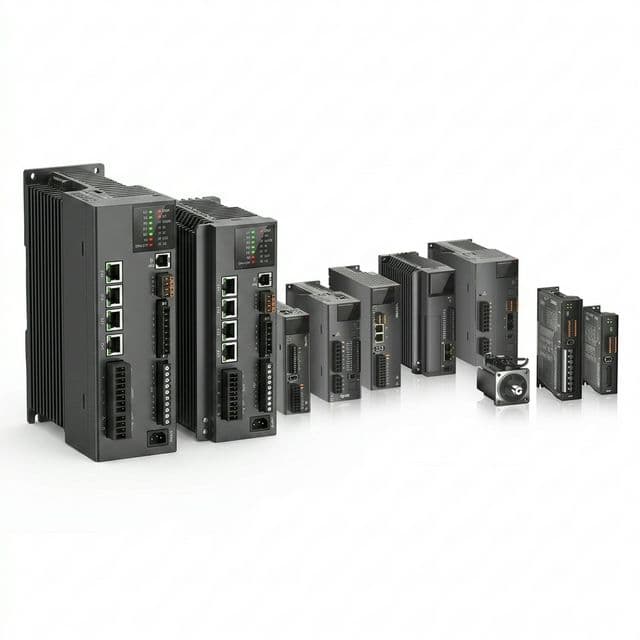
CAN Bus Motor Fit Tool for AMR Loads
Check whether a CAN bus motor package has plausible torque, network, profile, and safety evidence before supplier freeze. If your team says can bus on motors or can bus servo motor, use the same single workflow here.
CANopen screens support 50, 125, 250, 500, 800, or 1000 kbit/s nominal bitrate.
Torque margin
150%
Peak over continuous
CAN uncertainty
Moderate
Higher if profile or safety evidence is missing
Likely fit if supplier trace evidence confirms the assumptions.
Confidence
86%
Input completeness screen
Tractive force
304 N
Continuous torque / radius
Torque margin
150%
Peak over continuous
Warnings
- No major screening warnings, but final validation remains required.
Next actions
- Request supplier trace package and loaded bench validation.
- Freeze CAN object list, PDO rates, EMCY, and thermal evidence.
Core conclusions for CAN bus motor high torque decisions
The same page answers immediate sizing intent and the deeper buying question: whether the protocol, evidence, and safety boundary can carry a high torque motor program.
CAN FD payload
64 bytes
Compared with 8 bytes in Classical CAN
CANopen screen
25 m
CiA CC bus length at 1 Mbit/s
Review trigger
>60%
Conservative bus-load screen
Evidence sets
5
Torque, bus, profile, safety, service
| Conclusion | Decision impact | Refs |
|---|---|---|
| Classical CAN frame payload | Enough for compact command/status PDOs, weak for verbose diagnostics or high-rate multi-axis telemetry. | S1, S6 |
| CAN FD payload | Useful when high torque motors need richer diagnostics, but it does not increase motor torque by itself. | S1, S2 |
| CANopen FD object model | Ask suppliers to prove which objects, PDOs, USDO services, EMCY behavior, and diagnostics are implemented. | S2 |
| CiA 402 / IEC 61800-7-201 | Request object dictionary, state-machine, mode, PDO, and fault behavior evidence before freeze. | S3 |
| CANopen CC physical design at 1 Mbit/s | Use long harnesses, many nodes, or large stubs as hard review triggers on mobile platforms. | S7 |
| CANopen CC physical design below 1 Mbit/s | Use the selected bitrate as a topology decision, not a cosmetic setting; lower bitrates may recover harness margin but reduce command and diagnostic bandwidth. | S7 |
| Generic CAN physical design at 1 Mbit/s | Treat 25 m as the conservative CANopen screen and 40 m as a generic upper-reference, not a layout guarantee. | S4, S7 |
| High torque thermal boundary | Do not accept peak torque alone; require continuous torque, ambient, mounting, derating, and hot-motor traces. | S8 |
| Overload protection data | Mark supplier data as incomplete if nominal current or thermal time constant is missing. | S9 |
| CAN on the motor boundary | Interpret "CAN bus on motors" as CAN-connected drive or integrated motor selection, then verify the local drive closes fast current/speed loops and exports the required status objects. | S1, S3, S6 |
| Safety function evidence | Do not treat CAN commands alone as STO/SLS evidence unless safety architecture is documented. | S5 |
| OT cybersecurity and maintainability | For production AMRs, include access control, firmware update, parameter backup, diagnostic export, and incident recovery in the supplier evidence pack. | S10 |
| CAN Physical Layer Wiring & Cabling | Enforce stub length limits and terminal placement in physical drawings before first test runs to prevent reflections and CRC errors. | S4, S7, S17 |
| Encoder Power & Noise Integrity | Mitigate long-run cable voltage drop using >=0.5 mm² power pairs or remote sensing; keep shield floating at encoder to prevent ground loops. | S12, S18 |
| Motor First Spin & FOC Commutation | Integrate software safety limits (e.g., maximum speed clamping and quick-disable thresholds) to mitigate runaway risks during the first calibration test. | S9, S19 |
High torque CAN bus motor programs fail most often where torque thermal claims, bus capacity, profile behavior, and safety evidence intersect.
Methodology, assumptions, and data sources
The tool uses a conservative score because public protocol facts do not prove supplier implementation quality. Missing evidence lowers confidence.
These gates separate public protocol facts from supplier-specific proof. When a gate is missing, the page labels the conclusion as TBD instead of turning weak evidence into a positive decision.
| Gate | Evidence to request | Accept condition | Uncertainty label |
|---|---|---|---|
| Torque and thermal | Continuous torque curve, ambient, mounting, I2t settings, foldback trace | Continuous duty stays below hot-motor limit with documented derating. | TBD if only peak torque, stall torque, or room-temperature catalog data is available. |
| CAN physical layer | Bitrate, trunk length, max stub, accumulated stubs, termination, final harness capture | Selected bitrate and topology pass supplier limits and final vehicle measurement. | TBD if the supplier provides only protocol support without harness constraints. |
| Profile behavior | Object dictionary, NMT, heartbeat, PDO/SDO or USDO, EMCY, CiA 402 state transitions | Trace files prove claimed mode behavior and recoverable fault handling. | TBD if the claim is "CANopen compatible" without object-level traces. |
| Safety boundary | STO/SLS architecture, certified drive safety data, safety controller interface, validation plan | Normal CAN motion and safety-related power drive functions are documented separately. | Public protocol data is insufficient for safety claims without project-specific safety evidence. |
| Service and lock-in | Diagnostic export, parameter backup, firmware path, second-source or migration plan | Maintenance can replace or re-commission the motor without undocumented vendor steps. | TBD if evidence exists only inside a closed supplier app or demo laptop. |
The tool now applies the CiA lower-layer table by selected bitrate. This matters because lowering the bitrate can recover cable margin, but it also reduces room for high-rate status, diagnostics, and synchronized motion traffic.
| Bitrate | Bus length | Max stub | Accumulated stubs | Decision use |
|---|---|---|---|---|
| 1000 kbit/s | 25 m | 1.5 m | 7.5 m | Use only with short, measured harnesses and clear diagnostic-rate discipline. |
| 800 kbit/s | 50 m | 2.5 m | 12.5 m | Use only with short, measured harnesses and clear diagnostic-rate discipline. |
| 500 kbit/s | 100 m | 5.5 m | 27.5 m | Better harness margin, but confirm the lower update bandwidth is still acceptable. |
| 250 kbit/s | 250 m | 11 m | 55 m | Better harness margin, but confirm the lower update bandwidth is still acceptable. |
| 125 kbit/s | 500 m | 22 m | 110 m | Long-network option; usually too slow for dense high-torque motion telemetry. |
| 50 kbit/s | 1000 m | 55 m | 275 m | Long-network option; usually too slow for dense high-torque motion telemetry. |
The phrase “up to 64 bytes” hides a discrete set of allowed sizes. CAN FD uses the 4-bit data length code (DLC) where values 9 to 15 map to specific byte counts, and the CRC length changes once the payload exceeds 16 bytes. Use this when checking whether every node, gateway, and service analyzer actually accepts the payload size the supplier claims.
| DLC value | Data field | Decision note |
|---|---|---|
| 0 to 8 | 0 to 8 bytes | Same payload options as Classical CAN; no bandwidth gain yet. |
| 9 | 12 bytes | First extended payload step; still uses the 17-bit CRC. |
| 10 | 16 bytes | Largest payload that still uses the 17-bit CAN FD CRC. |
| 11 | 20 bytes | Switches to the longer 21-bit CRC for 20 to 64 bytes. |
| 12 | 24 bytes | Useful for richer diagnostic PDOs on dense servo networks. |
| 13 | 32 bytes | Common telemetry block size; 21-bit CRC applies. |
| 14 | 48 bytes | Large diagnostic or parameter dump; 21-bit CRC applies. |
| 15 | 64 bytes | Maximum CAN FD data field; every node, gateway, and analyzer must accept it. |
Source mapping last reviewed 2026-06-17. CAN FD keeps the arbitration phase at the same bit timing as Classical CAN (commonly up to 1 Mbit/s) and raises only the data-phase speed; CANopen FD (CiA 1301) recommends a 40 MHz CAN clock and supports data-phase bitrates up to 10 Mbit/s in the specification, with current implementations typically at 2 or 5 Mbit/s. CANopen FD also drops CAN remote frames that CANopen CC allows.
This boundary prevents the page from converting standards language into unsupported supplier conclusions. When the right-hand evidence is missing, procurement should keep the item open instead of scoring it as passed.
| Claim under review | Public evidence supports | Supplier evidence still required | Status label |
|---|---|---|---|
| CAN bus is installed on the motor itself. | Public CAN documents support a bus, controller area network, and higher-layer profiles; they do not prove where the transceiver, controller, power electronics, encoder, or brake are physically integrated. | Architecture drawing showing motor, drive, encoder, brake, CAN transceiver, power stage, connector pinout, shielding, grounding, and service access. | TBD until the supplier distinguishes bare motor, motor plus external drive, and integrated CAN motor package. |
| A CAN bus motor can meet the torque case. | Public CAN/CANopen sources define communication limits, not motor thermal capacity. | Continuous torque curve, ambient, mounting, winding thermal time constant, I2t/foldback settings, hot-load trace. | TBD until supplier data is supplied. |
| CANopen compatibility is enough for multi-vendor service. | CiA documents define profile and object-dictionary expectations. | Actual object dictionary, NMT, heartbeat, PDO/SDO or USDO, EMCY, CiA 402 state transitions under load. | TBD if only a marketing profile claim is available. |
| CAN FD solves the diagnostic bandwidth problem. | CAN FD supports larger payloads, and CANopen FD can preserve CANopen concepts with FD communication objects. | All-node FD support, gateway/analyzer support, arbitration/data-phase timing, captured load logs. | TBD when any node or service tool remains Classical CAN only. |
| The CAN command path can be credited as a safety function. | IEC 61800-5-2 is the power-drive safety reference; ordinary motion traffic is not certification evidence. | Safety function manual, STO/SLS architecture, certified inputs/outputs, validation plan, machine risk assessment. | Not accepted without project-specific safety evidence. |
| A private mobile robot CAN network has no cybersecurity work. | NIST SP 800-82 Rev. 3 identifies OT guidance for systems that monitor or cause direct changes in devices, processes, and events. | Commissioning access controls, firmware-signing or update procedure, parameter backup/restore, diagnostic-port policy, and recovery plan after unauthorized change. | TBD when supplier tools rely on unaudited service laptops, shared passwords, or undocumented firmware images. |
The alias phrase is useful for buying conversations, but it is not precise enough for engineering freeze. Separate the motor, drive electronics, CAN interface, encoder, brake, and service path before comparing quotes.
| What the phrase may mean | Practical interpretation | Evidence to verify | Decision risk |
|---|---|---|---|
| Bare motor with CAN nearby | The motor itself has windings, magnets, sensor, brake, and connectors, while an external drive or controller talks CAN. | Confirm motor electrical data, drive compatibility, encoder/brake wiring, grounding, and CAN object evidence from the external controller. | Procurement may buy a motor and discover the CAN capability was only in a separate controller option. |
| Integrated CAN motor | The motor package includes local drive electronics and a CAN/CANopen interface in or on the motor assembly. | Request thermal derating with electronics installed, connector current limits, IP rating, service tool, firmware path, and profile traces. | Packaging is simpler, but heat, sealing, service replacement, and vendor lock-in become stronger constraints. |
| CANopen drive axis | The drive uses a CANopen profile such as CiA 402 to expose motion modes, state machine behavior, and objects. | Capture NMT, heartbeat, PDO, SDO/USDO, EMCY, object dictionary, and state transitions under representative load. | A "CANopen compatible" label can hide incomplete modes or non-standard recovery behavior. |
| CAN command over local loops | The supervisory controller sends setpoints/status over CAN while the drive closes fast current and speed loops locally. | Ask for loop ownership, command period, watchdog behavior, fault reaction, and what happens during bus-off or heartbeat loss. | Trying to close current loops across a shared CAN bus creates timing and safety risk. |
| Evidence item | Known boundary | Decision use | Refs |
|---|---|---|---|
| Classical CAN frame payload | 8 data bytes per frame before protocol overhead | Enough for compact command/status PDOs, weak for verbose diagnostics or high-rate multi-axis telemetry. | S1, S6 |
| CAN FD payload | Up to 64 data bytes in the data field | Useful when high torque motors need richer diagnostics, but it does not increase motor torque by itself. | S1, S2 |
| CANopen FD object model | CANopen FD keeps the CANopen object dictionary structure and adds communication objects such as USDO. | Ask suppliers to prove which objects, PDOs, USDO services, EMCY behavior, and diagnostics are implemented. | S2 |
| CiA 402 / IEC 61800-7-201 | Standardized drive and motion control device profile | Request object dictionary, state-machine, mode, PDO, and fault behavior evidence before freeze. | S3 |
| CANopen CC physical design at 1 Mbit/s | CiA lower-layer guidance lists 25 m bus length, 1.5 m max stub, and 7.5 m accumulated stubs at 1 Mbit/s. | Use long harnesses, many nodes, or large stubs as hard review triggers on mobile platforms. | S7 |
| CANopen CC physical design below 1 Mbit/s | CiA lower-layer guidance scales maximum bus length from 50 m at 800 kbit/s to 100 m at 500 kbit/s, 250 m at 250 kbit/s, 500 m at 125 kbit/s, and 1000 m at 50 kbit/s. | Use the selected bitrate as a topology decision, not a cosmetic setting; lower bitrates may recover harness margin but reduce command and diagnostic bandwidth. | S7 |
| Generic CAN physical design at 1 Mbit/s | Kvaser describes about 40 m maximum cable length at 1 Mbit/s because arbitration needs round-trip propagation before sampling. | Treat 25 m as the conservative CANopen screen and 40 m as a generic upper-reference, not a layout guarantee. | S4, S7 |
| High torque thermal boundary | Motor constants can vary with temperature and catalog values may be tied to 25 C conditions. | Do not accept peak torque alone; require continuous torque, ambient, mounting, derating, and hot-motor traces. | S8 |
| Overload protection data | Controller overload protection depends on nominal current and winding thermal time constant for I2t-style temperature estimation. | Mark supplier data as incomplete if nominal current or thermal time constant is missing. | S9 |
| CAN on the motor boundary | Public CAN sources define the communication network; they do not turn the motor windings, encoder, brake, and power stage into a standards-compliant drive package by themselves. | Interpret "CAN bus on motors" as CAN-connected drive or integrated motor selection, then verify the local drive closes fast current/speed loops and exports the required status objects. | S1, S3, S6 |
| Safety function evidence | IEC 61800-5-2 safety functions are separate from ordinary motion commands | Do not treat CAN commands alone as STO/SLS evidence unless safety architecture is documented. | S5 |
| OT cybersecurity and maintainability | NIST SP 800-82 Rev. 3 was finalized on 2023-09-28 and frames OT security around performance, reliability, and safety requirements. | For production AMRs, include access control, firmware update, parameter backup, diagnostic export, and incident recovery in the supplier evidence pack. | S10 |
| CAN Physical Layer Wiring & Cabling | ISO 11898-2 and CiA 303-1 recommend 120 Ω terminal resistors at physical trunk ends, specific stub limits (e.g. max 1.5m at 1 Mbps), and proper shield grounding. | Enforce stub length limits and terminal placement in physical drawings before first test runs to prevent reflections and CRC errors. | S4, S7, S17 |
| Encoder Power & Noise Integrity | High-resolution feedback (like BiSS-C/SSI) requires tight supply margins (typically 5V ±10% at readhead), low loop delay, and single-point grounding at the controller end. | Mitigate long-run cable voltage drop using >=0.5 mm² power pairs or remote sensing; keep shield floating at encoder to prevent ground loops. | S12, S18 |
| Motor First Spin & FOC Commutation | Vector control (FOC) requires auto-tuning or manual calibration of the commutation offset angle between encoder index and rotor magnetic pole before issuing motion. | Integrate software safety limits (e.g., maximum speed clamping and quick-disable thresholds) to mitigate runaway risks during the first calibration test. | S9, S19 |
S1: CAN FD Protocol Specification
BoschSupports the 64-byte CAN FD payload boundary.
Source, accessed 2026-06-12S2: CANopen FD embedded networking overview
CAN in AutomationSupports CANopen FD communication objects, object dictionary continuity, USDO, and data phase limits.
Source, accessed 2026-06-12S3: CANopen device profile for drives and motion control
CAN in AutomationSupports the CiA 402 / IEC 61800-7-201 profile check.
Source, accessed 2026-06-12S4: CAN physical layer guidance
KvaserSupports practical bus-length and bitrate caution.
Source, accessed 2026-06-12S5: IEC 61800-5-2 safety requirements
IECSupports separating normal CAN motion from safety evidence.
Source, accessed 2026-06-12S6: ISO 11898 CAN standard family
ISOSupports using ISO 11898 as the CAN reference family.
Source, accessed 2026-06-12S7: CANopen lower layers and bit timing table
CAN in AutomationSupports CANopen CC bus length and stub-length review triggers by bitrate.
Source, accessed 2026-06-12S8: Motor data and simulation
maxon SupportSupports temperature-dependent motor constants and catalog-condition limits.
Source, accessed 2026-06-12S9: Technical data required by controllers
maxon SupportSupports requiring nominal current and winding thermal time constant for overload protection.
Source, accessed 2026-06-12S10: Guide to Operational Technology (OT) Security, SP 800-82 Rev. 3
NISTSupports treating CAN-connected motor networks as OT assets with availability, reliability, and safety constraints, not generic IT links.
Source, accessed 2026-06-12S11: EN 61800-5-2: more than just Safe Torque Off (STO, SS1, SBC, SBT)
Control Engineering EuropeSupports the actuator boundary that STO is a Stop Category 0 uncontrolled stop which removes motor torque but does not resist gravity; a lifting or holding actuator needs a mechanical brake plus safe brake control (SBC) or safe brake test (SBT).
Source, accessed 2026-06-17S12: Multi-turn absolute rotary encoder explained
KollmorgenSupports the actuator feedback boundary: multi-turn absolute encoders keep position across power cycles, and gear or lead-screw linkage introduces backlash and compliance error larger than encoder accuracy unless an output-side encoder corrects it.
Source, accessed 2026-06-17S13: Precision planetary gearbox efficiency and backlash data
NeugartSupports typical precision servo planetary gearbox datasheet ranges: efficiency around 94-97% and backlash below 1 arc-min for precision single-stage units, while economy planetary units reach roughly 10-20 arc-min.
Source, accessed 2026-06-17S14: CAN FD introduction: data length code and frame format
Vector InformatikSupports the CAN FD data length code to byte mapping (0-8, 12, 16, 20, 24, 32, 48, 64 bytes), the 17-bit CRC for 16 bytes and below, and the 21-bit CRC for 20 to 64 bytes.
Source, accessed 2026-06-17S15: EtherCAT slave CiA 402 example: modes of operation and object indices
Texas InstrumentsSupports the CiA 402 mode-of-operation codes written to 0x6060 and read from 0x6061, plus the core servo object indices 0x6040, 0x6041, 0x607A, 0x6064, 0x60FF, 0x6071, and 0x6077 used to capture a trace.
Source, accessed 2026-06-17S16: SD4x drive controller: supported drive modes object 0x6502 bitmask
Sieb & MeyerSupports the object 0x6502 supported drive modes interpretation as a 32-bit bitmask where bit 0 is pp, bit 2 pv, bit 3 tq, bit 5 hm, bit 7 csp, bit 8 csv, and bit 9 cst.
Source, accessed 2026-06-17S17: CiA 303-1: CANopen cabling and connector pin assignment recommendations
CAN in AutomationProvides physical-layer design constraints including max single stub length and cumulative stub limits per bitrate.
Source, accessed 2026-06-21S18: RESOLUTE BiSS-C serial absolute encoder installation guide
RenishawEstablishes absolute encoder power limits (5 V ± 10% supply voltage window), wire gauge (>=0.5 mm²), and single-point grounding rules.
Source, accessed 2026-06-21S19: EPOS4 Positioning Controller Commissioning Guidelines
maxon motorSupports FOC motor startup commissioning sequence, commutation offset calibration, phase offset autotuning, and runaway risk mitigations.
Source, accessed 2026-06-21Research access date: 2026-06-12. Supplier-specific values remain project evidence, not public facts.
Servo actuator decision dimensions for CAN bus packages
A CAN bus servo motor actuator adds a gear and a mechanical output, so the decision moves from motor torque alone to position mode, gear losses, feedback, and brake behavior. These dimensions separate what the protocol can carry from what the actuator physics demand.
Each row states what a public source supports and the decision test that follows. The actuator branch was added on 2026-06-17; supplier-specific gear, brake, and encoder values still require project evidence before production approval.
| Dimension | What the source supports | Decision test | Refs |
|---|---|---|---|
| Operating mode (CiA 402) | Servo actuators are mainly position devices. The modes that matter are Profile Position (pp, code 1) for point-to-point moves, Cyclic Synchronous Position (csp, code 8) for cycle-by-cycle coordinated setpoints, and Homing (hm, code 6) to set the absolute reference. The mode is requested in object 0x6060, confirmed in 0x6061, and the supported set is exposed in 0x6502. | Do not accept a generic CANopen claim. Check supported drive modes (0x6502) and capture pp, csp, and hm traces under load. A drive that only offers velocity or torque mode is weak for a position actuator. | S3 |
| Gear ratio and output torque | The actuator output torque equals motor torque times the gear ratio times gearbox efficiency. A single-stage precision planetary stage runs near 94-98% efficiency and roughly multiplies torque, but reflected inertia scales with the ratio squared. | Size the actuator at the output flange, not the motor. Ask for continuous output torque, the efficiency and ratio used, and the test load and duty, not motor-side torque alone. | S13 |
| Backlash and repeatability | Precision single-stage servo planetary gearboxes quote backlash at or below roughly 1 to 5 arc-min; economy planetary units often reach 10 to 20 arc-min. Backlash is a position dead-band and the datasheet value depends on the test method, load, and temperature. | If the machine needs positional repeatability, require the backlash figure, its measurement method, and whether the unit is single- or multi-stage. Multi-stage ratios accumulate backlash and lose efficiency. | S13 |
| Feedback across power cycles | An actuator that rotates through many turns needs multi-turn absolute feedback so it does not re-home after every power cycle. Battery-backed multi-turn encoders lose position if the battery dies; gearless energy-harvesting multi-turn encoders do not. An output-side encoder sees gear backlash that a motor-side encoder cannot. | Specify the feedback type, the battery maintenance plan, and whether position is read on the motor shaft or the actuator output. Missing multi-turn feedback forces a homing move on every restart. | S12 |
| STO does not hold a gravity load | Per IEC 61800-5-2, Safe Torque Off is a Stop Category 0 uncontrolled stop: it removes motor torque but does not resist external force. A geared actuator holding a vertical or lifting load still needs a mechanical holding brake, plus safe brake control (SBC) or safe brake test (SBT) to credit that brake in the safety function. | Never credit STO alone as the holding function for a lifting or gravity-loaded actuator. Require brake torque, engage and release timing, SBC or SBT evidence, and a Stop Category 1 sequence that brakes before motor torque is removed. | S5, S11 |
A CAN bus servo motor is not validated by a CANopen label. The drive must actually offer the mode the machine needs, written to object 0x6060 and confirmed in 0x6061. The table maps each mode code to its servo decision use. The same modes apply to the servo actuator branch, where position mode carries the geared output.
| Mode | Abbr | Code (0x6060) | Servo use and decision |
|---|---|---|---|
| Profile position | pp | 1 | Point-to-point moves where the drive generates the trajectory. Set the target in 0x607A and trigger via the control word 0x6040. Acceptable for simple servo moves; weak if the master must coordinate several axes cycle by cycle. |
| Profile velocity | pv | 3 | Speed setpoint with the drive controlling the ramp. Target written to 0x60FF. Fits traction and conveyor wheels; not a position actuator mode. |
| Profile torque | tq | 4 | Force or current control. Target torque written to 0x6071. Useful for force tasks, but it does not hold a position; a gravity-loaded axis still needs a brake. |
| Homing | hm | 6 | Reference run that sets the absolute zero using 0x607C home offset. Mandatory where single-turn or batteryless feedback loses the absolute reference at power-up. |
| Cyclic synchronous position | csp | 8 | Master streams a target position every cycle; preferred for robotics and coordinated servo axes. The strongest mode for a synchronized servo motor. Confirm the drive and master share the same cycle time. |
| Cyclic synchronous velocity | csv | 9 | Master streams a velocity setpoint per cycle instead of a position. Valid for synchronized speed control; verify it is advertised in 0x6502 if your machine needs it. |
| Cyclic synchronous torque | cst | 10 | Master streams a torque setpoint per cycle (0x6071 range, synchronized). Specialized; treat its absence in 0x6502 as a non-blocker unless torque syncing is a real requirement. |
Mode codes last verified 2026-06-17 against CiA 402 drive-profile documentation. A servo motor that needs synchronized motion must expose csp (code 8) in supported drive modes; a drive that only offers velocity or torque modes is weak for a position axis.
Object 0x6502 (supported drive modes) is a 32-bit value, not a single mode. Each bit advertises whether a CiA 402 mode is implemented. Read it before writing 0x6060: if the bit for the mode you need is clear, the drive will not accept that mode no matter what the datasheet claims. This turns a marketing “CANopen compatible” line into a yes/no evidence test.
| 0x6502 bit | Mode | Meaning when set |
|---|---|---|
| Bit 0 | pp | Profile position supported. |
| Bit 1 | vl | Velocity mode supported. |
| Bit 2 | pv | Profile velocity supported. |
| Bit 3 | tq | Profile torque supported. |
| Bit 5 | hm | Homing supported. |
| Bit 6 | ip | Interpolated position supported (legacy). |
| Bit 7 | csp | Cyclic synchronous position supported. |
| Bit 8 | csv | Cyclic synchronous velocity supported. |
| Bit 9 | cst | Cyclic synchronous torque supported. |
Bitmask layout last reviewed 2026-06-17. Example: a value with bits 0, 5, and 7 set supports pp, hm, and csp, which is a credible position-servo set; clearing bit 7 removes csp and weakens any synchronized-axis decision.
Use these indices as the minimum trace set when a supplier must prove profile behavior. The control and status words show the state machine; the mode objects prove the requested mode was accepted; and the target/actual pairs reveal following error, torque saturation, and tracking under load.
| Object | Name | Direction | What the trace proves |
|---|---|---|---|
| 0x6040 | Control word | Master to drive | 16-bit command that drives the CiA 402 state machine; capture it to prove Enable Operation (0x000F) and quick-stop sequencing. |
| 0x6041 | Status word | Drive to master | 16-bit feedback showing finite-state automaton state (Operation enabled, Fault, Fault reaction). Required evidence for a freeze decision. |
| 0x6060 | Modes of operation | Master to drive | Carries the mode code (pp=1, pv=3, tq=4, hm=6, csp=8). Confirm the requested mode is actually accepted. |
| 0x6061 | Modes of operation display | Drive to master | Reads back the active mode. A mismatch with 0x6060 means the requested mode is unsupported. |
| 0x6064 | Position actual value | Drive to master | Actual motor-side position. For a geared actuator, request output-side position too because the gear adds backlash. |
| 0x606C | Velocity actual value | Drive to master | Actual velocity; use it to verify the drive reaches the commanded speed within the cycle. |
| 0x6071 | Target torque | Master to drive | Torque setpoint; pair with 0x6077 to show the loop tracks torque under load. |
| 0x6077 | Torque actual value | Drive to master | Actual torque; high sustained values against continuous torque signal a thermal risk. |
| 0x607A | Target position | Master to drive | Position setpoint for pp and csp; capture it next to 0x6064 to show following error. |
| 0x60FF | Target velocity | Master to drive | Velocity setpoint for pv and csv; pair with 0x606C to confirm tracking. |
Object indices last verified 2026-06-17. A trace that omits the control and status words cannot prove the state machine reached Operation Enabled, so it is not enough evidence to freeze a servo motor package.
Protocol comparison for CAN bus motor packages
The right answer depends on what the CAN layer must carry: motion commands, diagnostic payload, vehicle telemetry, or a locked vendor package.
| Dimension | CANopen | CANopen FD | J1939 | Proprietary CAN |
|---|---|---|---|---|
| Best fit | Deterministic command/status for compact distributed drives | Higher diagnostic payload while preserving CAN-family tooling | Vehicle-style powertrain telemetry and parameter groups | Single-vendor motor package with locked stack |
| High torque evidence | CiA 402 profile, thermal foldback, PDO map, EMCY behavior | CANopen evidence plus FD data phase and gateway proof | PGN list, torque/speed signals, DTC handling | Register map, update path, logs, fallback behavior |
| Risk pattern | Profile claim exists but object behavior is incomplete | FD not supported across every node or analyzer | Good telemetry but weak motion-profile semantics | Fast pilot, high lock-in, harder replacement |
| Data payload boundary | Classical CAN payload remains compact; prioritize tight PDO maps | CAN FD payload can reach 64 bytes; useful for richer diagnostics | Parameter groups fit vehicle telemetry better than servo modes | Payload and logging depend on vendor tooling |
| Physical layer review | Check bitrate, trunk length, max stub, accumulated stubs, EMC | Check arbitration/data-phase timing and all-node FD support | Check vehicle harness conventions and diagnostic tooling | Require vendor harness limits and captured final-network traces |
| Thermal proof | Same motor proof as any protocol: continuous torque, I2t, foldback | More telemetry helps only if the drive records hot-load behavior | Useful for temperature/status telemetry, not torque physics | Require exported logs, not only vendor app screenshots |
| When not to choose | Remote current loop or high telemetry volume is required | Fleet tooling or safety controller cannot read FD traffic | Precise servo axis coordination is the primary requirement | Program needs second-source control over objects and logs |
Risk limits and mitigation
These limits keep the page useful for action while preventing the tool from over-claiming beyond public evidence.
| Risk | Trigger | Mitigation |
|---|---|---|
| Torque headline masks thermal limit | Peak torque is quoted without continuous torque, duty cycle, ambient, or derating curve. | Freeze supplier only after continuous torque, winding temperature, foldback, and hill-hold cases are documented. |
| CAN bus saturation | High node count, >60% estimated bus load, many diagnostics, or remote loop closure. | Keep fast loops local, reduce PDO rate, split networks, or evaluate CAN FD/EtherCAT for telemetry-heavy axes. |
| Physical layer optimism | 1 Mbit/s is selected while the real vehicle harness exceeds conservative CANopen length or stub guidance. | Record final trunk, stub, termination, shield, and oscilloscope evidence at the selected bitrate. |
| Profile mismatch | Supplier says CiA 402 but cannot provide mode, object dictionary, NMT, heartbeat, and EMCY traces. | Run an object-level acceptance script before the mechanical package is frozen. |
| Safety over-claim | Normal CAN commands are used as proof for STO, SLS, or personnel-safety stopping. | Separate normal motion control from certified safety architecture and require IEC 61800-5-2 evidence where applicable. |
| CAN FD over-generalization | Team assumes CAN FD payload or data-phase speed solves torque, safety, or thermal limits. | Treat CAN FD as a communication option; keep torque, I2t, safety, and harness proof as separate gates. |
| Alias-driven duplicate decisions | One team searches "can bus motor" while procurement searches "can bus motor high torque", "can bus on motors", or "can bus servo motor actuator". | Use /learn/can-bus-motor#alias-can-bus-motor-high-torque, /learn/can-bus-motor#alias-can-bus-on-motors, and /learn/can-bus-motor#alias-can-bus-servo-motor-actuator so every team evaluates the same assumptions on one canonical URL. |
| Motor versus drive ambiguity | A quote says "CAN bus on motors" but does not state whether CAN is in the motor, external drive, integrated actuator, or vehicle controller. | Require an architecture drawing, connector/pinout list, local-loop ownership, CAN transceiver location, and service replacement path before comparing suppliers. |
| OT security treated as an afterthought | Service laptop, USB-CAN adapter, firmware file, or parameter backup process can change drive behavior without controlled access or recovery evidence. | Add firmware/update control, parameter backup, diagnostic access, and recovery procedure to the same evidence pack as torque and CAN traces. |
The phrase can bus on motors is handled here because it asks the same decision question as can bus motor: whether the motor package uses CAN communication in a way that can carry commands, status, diagnostics, profile behavior, and supplier evidence for the target machine.
The phrase does not prove that CAN directly controls the motor windings or that the drive electronics are inside the motor housing. Treat it as a request for architecture evidence: where the CAN transceiver sits, which drive closes the fast loops, how faults and bus-off states are handled, and how the package is serviced after deployment.
Source-backed boundary last reviewed 2026-06-12: public CAN, CANopen, and OT security sources support network and evidence requirements; supplier drawings, hot-load traces, and service procedures remain required before production approval.
Do not create a dedicated route for this wording. Keep internal links, briefs, and procurement notes pointed to this canonical URL so the tool result and evidence report stay together.
The phrase can bus motor high torque is handled here because it asks the same core question as can bus motor: whether a CAN-connected package can support the required load with enough torque, thermal, communication, and safety evidence.
Do not create a separate page for that alias. Use this canonical URL and anchor for internal links, briefs, and engineering handoffs.
The phrase can bus servo motor actuator is handled here because it asks the same decision question as can bus motor: whether a CAN-connected package — here a servo actuator with motor, drive electronics, gearing, and mechanical output — can carry the torque, profile, safety, and supplier evidence the machine needs.
The word actuator does not change the decision task. It only signals that the buyer is comparing an integrated servo-actuator package rather than a bare motor. CAN still does not commutate the motor; the local drive closes current and speed loops while CAN carries commands, status, diagnostics, parameters, and faults. Ask for the actuator architecture drawing: motor, encoder, brake, gear ratio, output bearing, CAN transceiver location, power stage, connectors, shielding, grounding, service port, and firmware update path.
Because the output is geared, four actuator-specific facts decide the result and are covered in the servo actuator decision dimensions below: (1) the CiA 402 position mode the drive actually supports — profile position (pp), cyclic synchronous position (csp), and homing (hm) — checked via object 0x6502; (2) output torque after the gear ratio and efficiency, not motor-side torque; (3) backlash, since precision planetary gearboxes run at or below roughly 1 to 5 arc-min while economy units reach 10 to 20 arc-min; and (4) feedback across power cycles, where an output-side encoder corrects gear error a motor-side encoder cannot see.
Safety boundary: Safe Torque Off is a Stop Category 0 uncontrolled stop per IEC 61800-5-2. It removes motor torque but does not hold a vertical or lifting load. A geared actuator that must hold against gravity needs a mechanical holding brake plus safe brake control (SBC) or safe brake test (SBT), normally with a Stop Category 1 sequence that brakes before torque is removed. Crediting STO alone as the holding function is a known actuator integration failure.
Source-backed boundary last reviewed 2026-06-17: public CAN, CANopen, power-drive safety, encoder, and gearbox sources support the network, mode, brake, and feedback requirements on this page; actuator torque, gear efficiency, backlash, brake torque, and hot-load traces remain supplier-specific and must be confirmed before production approval.
Do not create a dedicated route for this wording. Keep internal links, briefs, and procurement notes pointed to this canonical URL and anchor so the tool result and evidence report stay together and no duplicate page fragments the intent cluster.
The phrase can bus servo motor is handled here because it asks the same decision question as can bus motor: whether a CAN-connected package — here a servo-class motor with its drive or integrated controller — can carry the torque, network load, profile, safety, and supplier evidence the machine needs.
Treat it as a request for a CAN-connected servo package, not as proof that CAN commutates the windings. The local servo drive still closes the fast current loop and the speed or position loop, while CAN carries commands, status, diagnostics, parameters, and faults. Compared with the can bus servo motor actuator branch, this phrase does not assume a geared mechanical output, so size it at the motor flange and encoder first, then confirm any downstream gearing separately.
Three servo-specific facts decide the result and are covered by the tool and the CiA 402 servo mode and trace tables: (1) the CiA 402 control word and modes the drive actually supports — velocity (pv), torque (tq), profile position (pp), cyclic synchronous position (csp), and homing (hm) — checked via the object 0x6502 bitmask; (2) encoder feedback type and resolution, since single-turn motor feedback behaves differently from multi-turn or output-side feedback after power loss; and (3) loop-closure location, because a servo motor that relies on a remote controller to close current is a poor fit for a CAN-only architecture.
Safety boundary: Safe Torque Off is a Stop Category 0 uncontrolled stop per IEC 61800-5-2. It removes motor torque but does not resist gravity or hold position. A servo motor on a vertical or lifting axis still needs a mechanical holding brake plus safe brake control (SBC) or safe brake test (SBT), normally with a Stop Category 1 sequence that brakes before torque is removed.
Source-backed boundary last reviewed 2026-06-17: public CAN, CANopen, CiA 402, power-drive safety, and encoder sources support the network, mode, loop-closure, and brake requirements on this page; servo torque, encoder resolution, thermal foldback, and hot-load traces remain supplier-specific and must be confirmed before production approval.
Do not create a dedicated route for this wording. Keep internal links, briefs, and procurement notes pointed to this canonical URL and anchor so the tool result and evidence report stay together and no duplicate page fragments the intent cluster.
Before attempting the first motor spin in a CAN-connected architecture, the developer must systematically verify the physical layer wiring and encoder feedback integrity to prevent signal reflection, communication drops, or hazardous motor runaway.
| Verification Domain | Technical Specification & Limits | Failure Risks | Actionable Countermeasures | Ref |
|---|---|---|---|---|
| CAN Cabling & Termination | • Resistors: Exactly two 120 Ω terminal resistors at the absolute physical ends of the trunk (60 Ω nominal bus resistance). • Stub Limits: Keep stubs below max un-terminated limits based on bitrate (e.g. ≤1.5 m at 1 Mbps, ≤5.5 m at 500 kbps per CiA 303-1). • Voltage: Recessive: 2.5V differential (CAN-H/CAN-L both at ~2.5V); Dominant: CAN-H ≥3.5V, CAN-L ≤1.5V. | Missing or incorrect termination leads to signal reflections. Excess stub length creates impedance discontinuities causing high bit-error rates (BER) and sudden bus-off faults. | Measure differential resistance across CAN-H and CAN-L with system powered off (verify 60 Ω). Audit trunk-line lengths and stub layout in mechanical drawings. | S7, S17 |
| Encoder Power Integrity | • Voltage Window: Encoders require 5 V ±10% (4.5V to 5.5V) at the encoder readhead connector. • Conductor Gauge: ≥0.5 mm² (20 AWG) for power supply pairs on long runs (>10 m) to prevent IR drop. • Compensation: Clock rate >2 MHz over long cables require line delay compensation in the drive. | In-rush currents or voltage drops cause encoder micro-resets, triggering intermittent position faults, CRC errors, or incorrect commutation tracking during startup. | Use remote sensing lines to adjust drive-supply output, or parallel power cores. Float the shield on the encoder side; ground the shield only at the drive cabinet PE to avoid ground loop currents. | S12, S18 |
| Commutation Offset Alignment | • FOC Alignment: Commutation offset angle between encoder zero-index and rotor magnetic pole must be calibrated (e.g. ±1° electrical accuracy). • Autotuning: Perform commutation search procedure at no-load catalog conditions. • Limits: Clamp initial current limits to ≤25% of nominal during first spin. | Incorrect offset causes the field-oriented control (FOC) to apply torque in the wrong direction, resulting in immediate motor runaway (flying speed) or winding overheating. | Configure speed limits (e.g., ≤100 RPM) and position tracking error thresholds in object 0x6065. Keep the emergency stop circuit wired to physical STO inputs active during first spin. | S9, S19 |
First Spin Pre-Commissioning Checklist
- Verify CAN bus termination by measuring resistance with power off (must read 60 ± 5 Ω).
- Measure voltage at the encoder connector under active power (must be within 4.75V - 5.25V).
- Validate that the encoder shield is single-point grounded in the controller cabinet and floating on the motor.
- Perform the encoder direction and pole-pair auto-identification wizard before starting the FOC offset test.
- Enable low current limits, set velocity limits in drive object 0x606F, and verify that the physical Emergency Stop disables the drive output.
Source-backed boundary last reviewed 2026-06-21. Standard CAN bus cabling guidelines, serial absolute encoder specifications, and FOC commutation procedures support the physical layer, power supply, and commissioning recommendations above. All field commissioning values are project-specific.
Scenario examples
These examples show how the same tool result changes once torque duty, bus load, profile evidence, and supplier lock-in change.
Inputs: 95 Nm peak, 38 Nm continuous, 12 nodes, 500 kbit/s, local loop
Result: Review-ready when CiA 402 and thermal foldback traces are supplied
Why: Torque margin is plausible, but supplier evidence decides integration risk.
Inputs: 140 Nm peak, 45 Nm continuous, repeated hill-hold equivalent duty
Result: Risk unless brake, thermal, and safety evidence are separated
Why: CAN bus can command the motor, but holding load is a thermal and safety problem.
Inputs: 24 nodes, 75% busload, frequent diagnostic logs
Result: Inconclusive until CAN FD or split-network evidence is proven
Why: The phrase CAN bus motor does not guarantee enough diagnostic bandwidth.
Inputs: 32 m trunk, 0.8 m stubs, 500-1000 kbit/s candidate bitrate
Result: Review before freeze
Why: CiA CANopen guidance is stricter than generic CAN references at 1 Mbit/s, so the final harness needs measurement evidence.
Inputs: Repeated starts, 35 C ambient, high traction load, no I2t settings
Result: TBD / public evidence insufficient
Why: The public protocol facts cannot validate continuous torque without winding thermal time constant and hot-load derating data.
Inputs: Proprietary CAN objects, stable demo, no public profile claim
Result: Fit for pilot, review for production
Why: Fast commissioning can be valid, but replacement and tooling risk stay open.
Inputs: Supplier quote lists CAN, motor, brake, and encoder but does not show whether the drive is integrated or external
Result: TBD until architecture is separated
Why: The phrase can describe several valid packages; the decision changes once heat, service access, local loops, and connector boundaries are visible.
Inputs: Geared servo actuator, vertical lift, CiA 402 position mode unverified, STO-only safety, no brake evidence
Result: Risk until brake and position-mode evidence are added
Why: STO removes motor torque but does not hold a gravity load, so the actuator needs a holding brake plus SBC or SBT and a pp or csp position-mode trace, not only a torque disable.
FAQ
Decision questions grouped around fit, evidence, and procurement risk.
What is a CAN bus motor?
It usually means a motor package whose drive or integrated controller accepts CAN-family communication for commands, status, diagnostics, or configuration. The motor physics still depend on torque, speed, thermal design, gearing, and load case.
Does "can bus on motors" need a separate page?
No. That phrase is an alias of can bus motor selection intent. The same canonical URL answers it at /learn/can-bus-motor#alias-can-bus-on-motors.
Does CAN bus on motors mean the bus controls the motor windings directly?
No. Treat it as a CAN-connected motor package or drive axis. The power stage and fast current or speed loops still need local drive electronics; CAN normally carries commands, status, diagnostics, parameters, and faults.
Does "can bus motor high torque" need a separate page?
No. That phrase is an alias of can bus motor selection intent. The same canonical URL covers the high torque branch with /learn/can-bus-motor#alias-can-bus-motor-high-torque.
Does "can bus servo motor actuator" need a separate page?
No. That phrase is an alias of can bus motor selection intent. It asks the same decision question — whether a CAN-connected servo actuator package can carry the torque, profile, safety, and supplier evidence the machine needs. It is answered on this canonical URL at /learn/can-bus-motor#alias-can-bus-servo-motor-actuator.
What does "can bus servo motor actuator" actually describe?
It usually describes a servo-class motor plus its drive electronics and mechanical output (gear, brake, or rotary/linear actuator) offered as one CAN-connected package. CAN does not commutate the motor; the local drive closes current and speed loops while CAN carries commands, status, diagnostics, parameters, and faults. Treat the phrase as a request for actuator architecture evidence, not a separate product category.
Does "can bus servo motor" need a separate page?
No. That phrase is an alias of can bus motor selection intent. It asks the same decision question: whether a CAN-connected servo motor package can carry the torque, bus load, profile, safety, and supplier evidence the machine needs. It is answered on this canonical URL at /learn/can-bus-motor#alias-can-bus-servo-motor.
What does "can bus servo motor" actually describe?
It usually means a servo-class motor whose drive or integrated controller accepts CAN-family communication for commands, status, diagnostics, parameters, and faults. The servo drive still closes the fast current and speed or position loops locally; CAN does not commutate the motor. Treat it as a request for a CAN-connected servo package, not proof that CAN controls the windings directly.
Is high peak torque enough for an AMR traction motor?
No. Peak torque is useful for acceleration and obstacle events, but supplier freeze needs continuous torque, duty cycle, thermal foldback, braking, wheel radius, and traction assumptions.
When is CAN bus a poor fit for high torque motion?
It is a poor fit when the design expects remote current-loop closure, large synchronized multi-axis telemetry, or safety functions carried by ordinary motion messages.
What makes a high torque claim credible?
Credible evidence includes continuous torque at the target ambient, mounting and cooling assumptions, winding thermal time constant, I2t or foldback settings, and hot-load traces. Peak torque alone is not enough.
What should be marked TBD?
Mark the decision TBD when supplier data lacks thermal constants, final harness limits, object-level CAN traces, or safety architecture. Public protocol documents cannot fill those supplier-specific gaps.
What should a supplier drawing show for CAN bus on motors?
Ask for the location of the CAN transceiver, motor drive, encoder, brake, power stage, connectors, shielding, grounding, service port, and firmware update path. Without that drawing, the phrase is too ambiguous for production freeze.
Should I require CiA 402 for a CAN bus motor?
Require it when multi-vendor drive behavior, standardized modes, and service tooling matter. A custom object model may still work for a pilot but carries replacement risk.
Does CAN bus servo motor actuator mean CAN drives the actuator directly?
No. CAN carries commands, status, diagnostics, parameters, and faults. The local drive closes current and speed loops and usually runs a CiA 402 position mode such as profile position (pp) or cyclic synchronous position (csp). Because the output is geared, output torque and backlash are gearbox properties, not CAN properties, so size the decision at the output flange.
Which CiA 402 modes matter for a CAN bus servo actuator?
Profile position (pp), cyclic synchronous position (csp), and homing (hm) are the modes most position actuators need. Check supported drive modes object 0x6502 and capture traces for the modes your machine uses; a drive that only offers velocity or torque mode is weak for a position actuator.
How do I read object 0x6502 supported drive modes?
It is a 32-bit bitmask, not a single mode. Bit 0 is profile position (pp), bit 2 profile velocity (pv), bit 3 profile torque (tq), bit 5 homing (hm), bit 7 cyclic synchronous position (csp), bit 8 cyclic synchronous velocity (csv), and bit 9 cyclic synchronous torque (cst). Read it before writing the mode code to 0x6060; a clear bit means the drive will not accept that mode, regardless of any CANopen-compatible marketing line.
What are the valid CAN FD payload sizes?
CAN FD allows 0 to 8 bytes (identical to Classical CAN) and then 12, 16, 20, 24, 32, 48, or 64 bytes. The 4-bit data length code uses DLC values 9 to 15 for these extended sizes. The CRC is 17 bits for payloads of 16 bytes and below and 21 bits for 20 to 64 bytes. Confirm every node, gateway, and service analyzer accepts the payload size you plan to use.
What is the minimum CiA 402 object set a supplier trace must include?
At least the control word (0x6040), status word (0x6041), modes of operation (0x6060) and its display (0x6061), and the target/actual pair for the controlled variable: target position 0x607A with position actual 0x6064 for position, target velocity 0x60FF with 0x606C for velocity, or target torque 0x6071 with torque actual 0x6077 for torque. A trace missing the control and status words cannot prove the drive reached Operation Enabled.
Is Safe Torque Off enough to hold a lifting servo actuator?
No. IEC 61800-5-2 defines STO as a Stop Category 0 uncontrolled stop that removes motor torque but does not resist gravity. A lifting or vertical actuator needs a mechanical holding brake plus safe brake control (SBC) or safe brake test (SBT), and normally a Stop Category 1 sequence that engages the brake before motor torque is removed.
Does CAN FD automatically solve high torque motor integration?
No. CAN FD increases payload capacity, but every drive, gateway, analyzer, controller, and service process must support the selected FD behavior.
What traces should a supplier provide?
Ask for NMT, heartbeat, SYNC/PDO, SDO or USDO, EMCY, profile mode, object dictionary, thermal foldback, and fault recovery captures under representative load.
Is a successful spin test enough?
No. A spin test proves basic actuation, not bus-load margin, profile behavior, thermal derating, safety boundaries, or fleet diagnostics.
How strict should I be about 1 Mbit/s cable length?
Use the stricter application guidance for your stack. For CANopen CC, CiA lower-layer guidance lists 25 m bus length at 1 Mbit/s, while generic CAN references may cite longer practical examples. Final harness measurement still decides.
Can I lower the CAN bitrate to make a long harness acceptable?
Sometimes, but it is a trade-off. CiA CANopen CC guidance allows longer bus and stub lengths at lower bitrates, but the design then has less bandwidth for command, status, diagnostics, and synchronization traffic.
Does CANopen FD change the torque rating?
No. CANopen FD can improve communication payload and diagnostics, but torque rating still comes from the motor, drive current, thermal design, gearing, and load case.
What happens if the CAN bus goes bus-off or heartbeat is lost?
Do not assume a safe result. Require supplier traces for watchdog, heartbeat loss, bus-off recovery, brake behavior, torque disable, and restart sequence under load.
How should procurement compare CAN bus motor suppliers?
Compare torque evidence, profile evidence, bus-load evidence, safety separation, service tooling, replacement options, and trace files instead of comparing peak torque alone.
What should I do when public evidence is incomplete?
Mark the decision as inconclusive, request the missing supplier artifacts, and run the tool again with confirmed assumptions. Unknown evidence should not become a positive score.
Can this tool replace compliance validation?
No. It is a pre-screening and decision documentation tool. It does not replace EMC, functional safety, cybersecurity, or final machine validation.
Why link this page from motor PID tuning and diagnostics pages?
Those workflows often fail when teams tune or diagnose a motor before confirming that the CAN profile, bus load, and supplier evidence can carry the intended high torque operating case.
What is the minimum supplier evidence pack?
Ask for torque curves, thermal constants, CAN object dictionary, final-network traces, fault recovery logs, firmware/service procedure, and separate safety-function documentation where STO or SLS is part of the machine risk reduction.
Can a proprietary CAN motor still be a good decision?
Yes for pilots or tightly controlled fleets, if the supplier provides logs, firmware paths, service tooling, and replacement procedures. It remains a higher lock-in risk than a proven standard profile.
Should cybersecurity be part of a CAN bus motor review?
Yes for production AMR fleets. Include service access, firmware updates, parameter backup, diagnostic adapter control, and recovery after unauthorized changes. Public CAN protocol evidence does not prove those operational controls.
Need a supplier evidence review?
Bring torque curves, CAN traces, object dictionaries, fault logs, and safety notes. The review starts from the same canonical checklist.
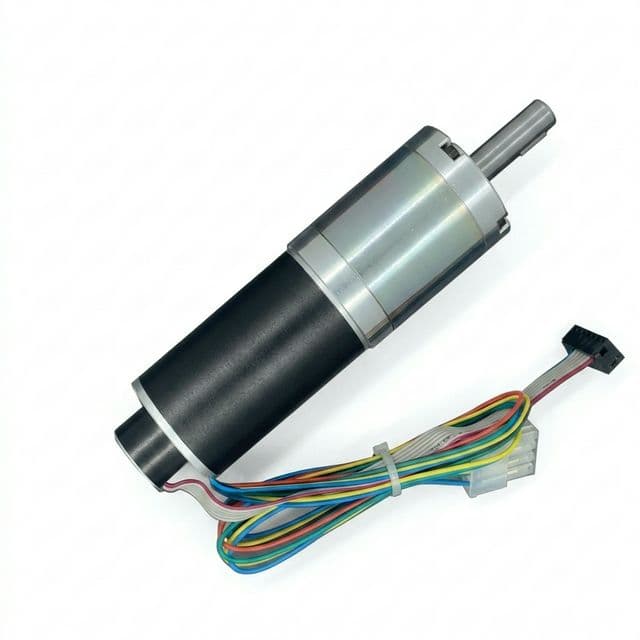
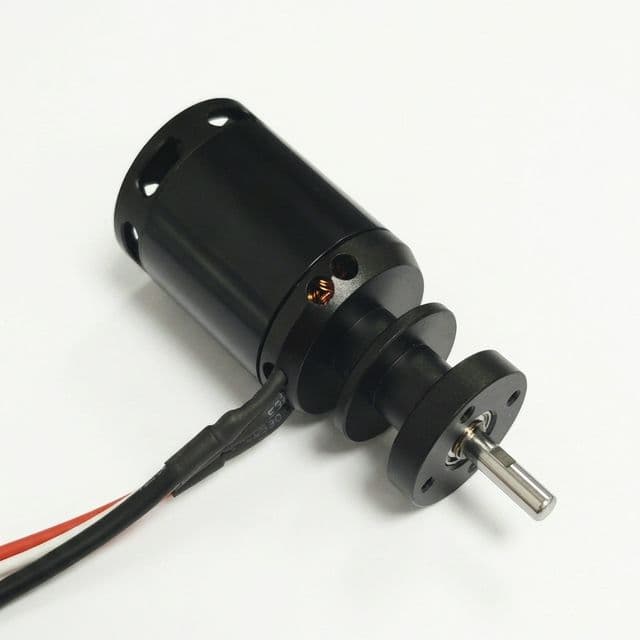
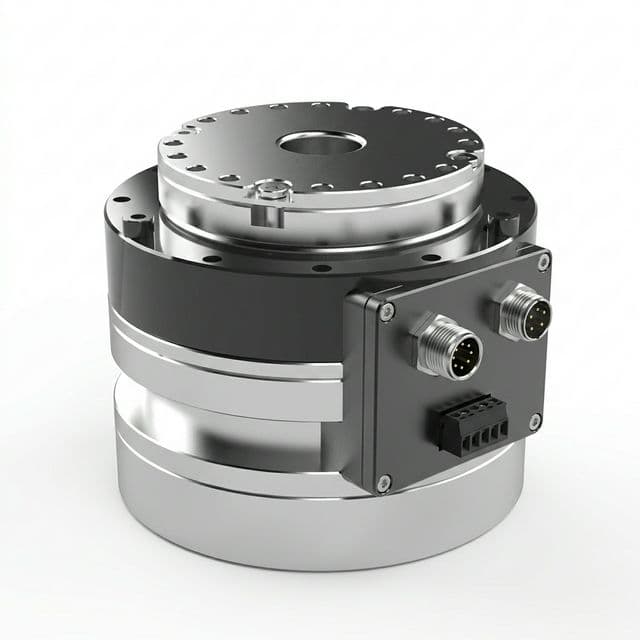
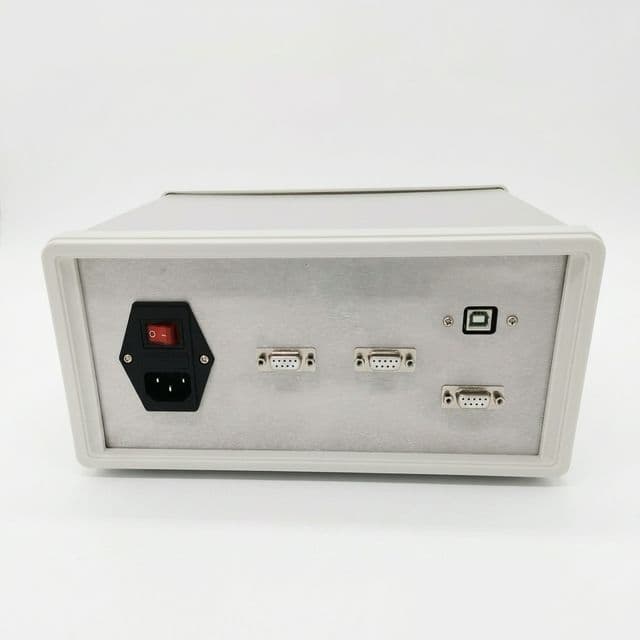
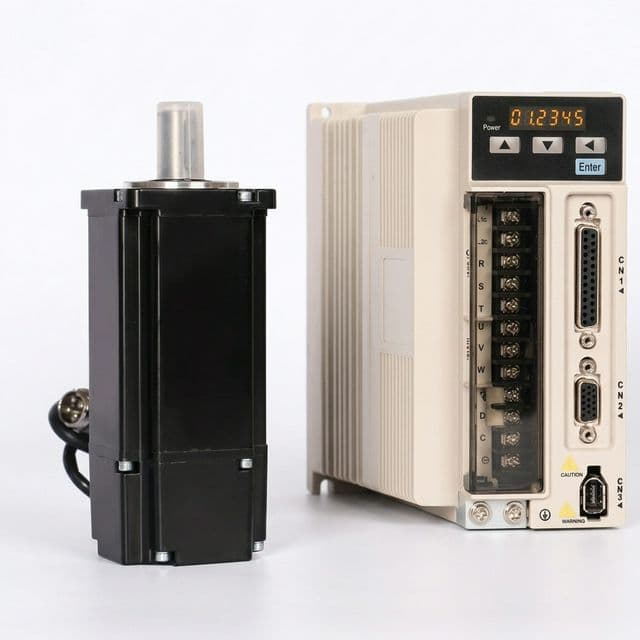
Motor and drive modules used in CAN bus motor reviews
Use supplier evidence to connect torque, profile, thermal, and service requirements before production freeze.