
Actuator Control Unit Sizing Tool for AMR
Screen “control unit actuators” for AMR traction: enter vehicle mass, wheel size, speed, grade, and duty to get per-wheel torque, architecture guidance, and supplier checks.
Defaults are tuned for a mid-payload indoor AMR fit baseline. Adjust boundaries to match your real vehicle, floor, and duty profile. Base mass and payload are combined automatically as total moving mass.
Every result includes interpretation, boundaries, and the next executable action. The 0–100 score is a rule-based screening heuristic, not a probability or safety rating.
Published April 29, 2026 | Page updated October 14, 2026 | Current standards and legal status checked October 14, 2026. Prepared by Adrian Kowalski, B2B Applications & OEM Program Lead at AMRDriveUnit. This workflow adds control-stack readiness (bus timing, safety-chain evidence, and commissioning boundaries) to mechanical sizing. Next scheduled source review due April 14, 2027, or sooner after a material standards or regulation update.
41 public standards/regulation references
ISO/IEC/CiA/PNO/PI/Beckhoff/ANSI/EUR-Lex sources are mapped to method, risk, and tradeoff sections.
4 decision states with boundary warnings
Fit/review/risk/inconclusive outputs include explicit next actions.
4 architecture options compared
Compact integrated, steer-drive, sealed heavy-payload, and split-drive options are compared.
Actuator Control Unit Report Summary
Core conclusions, key numbers, and audience boundaries are shown here so the tool result can be used in procurement and design decisions.
Run the tool to generate torque, architecture fit, and risk-boundary interpretation.
19 Jul 2023 / 20 Oct 2026 / 20 Jan 2027
Corrected milestones for Regulation (EU) 2023/1230
20 October 2026 is scoped to Article 50(1) and the Article 50(2) notification deadline; general application begins 20 January 2027.
Evidence: S3, S13, S22
2026-01-13 / 2026-03-13 / 2026-09-07
Three 2026 OJ updates to the Machinery Directive standards chain
These acts update references supporting Directive 2006/42/EC. Check the product transition and placing-on-market scope; do not read them as amendments to Regulation 2023/1230.
Evidence: S34, S35, S36, S40
Summary list = information only
EU machinery summary list is not a standalone legal-effect source
Use OJ legal acts (decision + amendments) for release-critical conformity gates. Treat summary PDF/XLS as convenience view only.
Evidence: S34
ISO 3691-4:2023 -> ISO/DIS 3691-4
AMR/AGV baseline is active but revision is already in DIS stage
This is a live transition state, not a static citation. Long-cycle projects should define revalidation triggers before SOP.
Evidence: S1, S23
ISO 12100:2010 -> ISO/DIS 12100.3
Risk-assessment framework has an active draft successor
The latest DIS ballot closed on 2026-09-15; ISO still lists it at stage 40.60. The 2010 edition remains the published baseline until a replacement is issued.
Evidence: S14, S24
2026-07-24
Regulation (EU) 2026/1744 updates the AI-law interface for machinery
Check the separate AI-system scope when AI is used as a safety component or the machinery itself is a qualifying high-risk AI system; this does not apply to every actuator unit.
Evidence: S22, S41
IEC 60529 vs ISO 20653
IP code boundary that affects interpretation of IP69K language
This page treats IP69K as an environment-specific claim requiring context, not a universal shorthand.
Evidence: S4, S5
31.25 us
PROFINET base clock from guideline reference
Used to frame expected controller-network timing discipline in higher-dynamic actuator loops.
Evidence: S9
>10 ms / <5 ms & >250 us / <250 us
PROFINET guideline time-requirement bands
PNO guideline classifies these as typical boundaries for RT/TSN free-running, IRT/TSN clock-synchronous, and manufacturer-specific ultra-fast solutions.
Evidence: S9
CC-A / CC-B / CC-C / CC-D
PROFINET conformance classes define minimum capability envelope
PNO guidance states CC-A should be used only when higher classes cannot be used; CC-C/CC-D align better with high timing demands.
Evidence: S9
TSN-capable hardware required
PROFINET over TSN migration is not a software-only assumption
PI TSN FAQ indicates existing Ethernet components typically cannot be upgraded to TSN by software only. Plan hardware and certification impacts early.
Evidence: S26
10 to 1000 kbit/s
CANopen data-rate envelope (CiA summary)
For CANopen CC planning, CiA lower-layer guidance is more restrictive than generic CAN examples: while CAN HS headlines often cite about 40 m at 1 Mbit/s, CANopen CC planning uses about 25 m plus short stub limits.
Evidence: S10, S11, S16
50 us to >100 ms
TwinCAT task-cycle range in EtherCAT documentation
Used as a reminder that final behavior depends on full control-loop scheduling, not bus label alone.
Evidence: S12
<=100 us cycle / <=1 us jitter
EtherCAT public technology baseline for high-dynamic positioning
This is a technology-level reference, not an automatic application guarantee. Final timing still depends on full control-loop design.
Evidence: S25
100 m
Typical max cable distance between two EtherCAT participants
Beckhoff documentation decomposes the segment as 5 m patch + 90 m installation + 5 m patch; physical topology remains a first-order constraint.
Evidence: S18
B56.5-2024 + R15.08-2-2023
North America IMR/AGV safety baseline set
For US/NA deployments, acceptance evidence often requires this package view rather than ISO-only mapping.
Evidence: S19, S20, S21
6.95 million
Installed PROFIsafe nodes (PI listing snapshot)
Useful maturity signal, but installed-node scale is not a substitute for profile conformance plus system-level validation.
Evidence: S28, S30
62443-2-1:2024 + TR62443-2-2:2025
IACS cybersecurity baseline has fresh program/protection updates
Timing-fit decisions do not replace security lifecycle obligations. Treat cybersecurity governance as a separate acceptance gate.
Evidence: S37, S38
Order 7.362 v1.00 (2025-11)
New PROFINET Design Guideline Security publication is available
Adds planner/integrator/operator checklists that can be converted into concrete FAT/SAT security readiness criteria.
Evidence: S39
ISO 13849-2:2012 -> ISO/DIS 13849-2
SRP/CS validation baseline is in active transition
Keep design (Part 1) and validation (Part 2) artifacts version-locked and refresh validation templates when DIS/PUB state changes.
Evidence: S31, S32
IEC 61784-3:2021+AMD1:2024
Safety fieldbus framework has active maintenance updates
Safety-over-fieldbus claims require profile-specific evidence and device/system validation, not just deterministic cycle-time numbers.
Evidence: S29, S30, S33
+15% to +40% reserve
Current sizing reserve policy in this calculator
This internal thermal/environment margin excludes the separate peak shock factor. No single public cross-vendor standard mandates this percentage window.
Evidence: Pending public benchmark (internal policy only)
Need supplier-ready validation next?
Use the tool output as the first filter, then move to diagnostics, control tuning, and compliance checks before RFQ lock-in.
Related AMR Engineering Pages
Use these links to complete adjacent decisions around diagnostics, control tuning, and safety architecture.
- Actuator with control unit alias entry to this canonical tool + decision report
- Actuator control units alias entry to this canonical tool + decision report
- Actuator unit mechanical sizing page (when you only need wheel-force and payload sizing)
- AGV drive system selection page (full architecture, protocol, and lifecycle risk workflow)
- AGV drive unit selection page (single-module sizing, boundary notes, and supplier-action checklist)
- Electric motor diagnostics for AMR drive reliability
- Motor PID tuning playbook for drive commissioning
- Machinery Directive 2006/42/EC compliance planning guide
- STO and SLS safety function implementation guide
- Request AMR actuator-control-unit engineering review
Actuator Control Unit Methodology & Evidence
This section explains how outputs are derived, where assumptions begin, and which references support key decisions.
| Step | Formula / logic | Decision value | Boundary | Evidence |
|---|---|---|---|---|
| Traction baseline | Fr = c * m * g | Converts floor condition and gross mass into baseline resistance force before grade and acceleration are considered. | No universal public coefficient set covers all wheel compounds and contamination states; calibration must come from your pilot telemetry. | Internal calculator assumption; no external standard or dataset. |
| Grade + acceleration force | Fpeak = (Fr + (m * g * grade) + (m * v / t)) * peak shock factor | Captures incline and speed-ramp demand that usually dominates peak actuator-control-unit sizing in AMR transfers. | Assumes linear acceleration and no wheel slip. The optional 1.20 shock multiplier applies to peak demand only; high-jerk duty profiles require motion-profile simulation. | Internal calculator assumption; no external standard or dataset. |
| Continuous torque screening estimate | Fcont = Fr + 0.55 * Fgrade; Tcont/recommended = Fcont * wheel radius / drive wheels * (1 + reserve) | Provides a repeatable continuous-load screen when a route grade profile is not yet available. | The 55% maximum-grade factor is an internal assumption, not a measured route profile or thermal model. Transient shock is excluded; replace this estimate with measured duty data and supplier torque-temperature/derating curves before procurement. | Internal calculator assumption; no external standard or dataset. |
| Control-loop timing sanity check | Tresponse ~= Tcontroller + Tfieldbus + Tdrive | Communication and control timing can dominate slip and thermal behavior when dynamic demand is high. | Protocol labels are not enough. For demanding loops, validate where your application falls against published timing bands (for example >10 ms, <5 ms and >250 us, or <250 us manufacturer-specific paths) and verify service-layer behavior when TSN is introduced. | S9, S10, S16, S17, S12, S18, S26 |
| Safety communication profile gate | Safety-over-fieldbus claim = profile conformance + device evidence + SRP/CS validation | Prevents teams from confusing deterministic timing with a validated functional-safety channel. | Bus determinism alone is not a PL/SIL claim. Require profile-specific evidence (for example PROFIsafe or CANopen Safety) plus validation artifacts before safety acceptance. | S28, S29, S30, S31, S33 |
| OT-security readiness gate | Security-ready = IACS security program baseline + protocol security checklist + commissioning evidence | Prevents teams from shipping high-performance networks that are not operationally ready for cybersecurity requirements. | Passing motion/timing tests is not enough. ISA/IEC 62443 program requirements and protocol-specific security guidance should be tracked as separate gate artifacts. | S37, S38, S39 |
| Safety-architecture boundary | Safety claim valid only after PL/SIL target + verification are frozen | Avoids treating safety features as ready-made compliance outcomes before system-level validation. | ISO 13849-1 principles and IEC 61800-5-2 functions still require project-specific target definition and verification; IEC 60204-1 scope starts at the electrical supply connection and does not remove the need for system-level stop-strategy design. | S6, S7, S8, S15 |
| Jurisdiction and scope gate | Applicable standard set = deployment region + operating scope | Prevents design teams from carrying one region or one standard package into a different regulatory acceptance context. | ISO 3691-4 excludes power-source requirements and some operating contexts. North America deployments commonly require B56.5/R15.08 package mapping in addition to ISO-based engineering references. | S1, S19, S20, S21 |
| Per-wheel torque split | T = (F * r) / n | Maps total force to per-wheel torque requirement using wheel radius and number of traction wheels. | Assumes symmetric load sharing. Real vehicles need correction for CG offset and transient axle transfer. | Internal calculator assumption; no external standard or dataset. |
| Reserve and risk adjustment | Trecommended = T * (1 + reserve) | Adds a thermal/environment planning margin for duty-cycle heating, ambient stress, ingress, and feedback uncertainty. Peak shock is handled separately. | Reserve factor here is a policy choice (15%-40%), not a normative requirement. The shock checkbox applies a separate 1.20 factor to peak force only. | S1, S6, S7 |
| Milestone | Date / version | Planning impact | Evidence |
|---|---|---|---|
| Regulation (EU) 2023/1230 enters into force | 2023-07-19 | Use this corrected force date in contract and declaration planning; avoid outdated 13 July date variants from pre-corrigendum copies. | S3, S13 |
| Article 50 penalties and Member State notification (corrected dates) | 2026-10-20 | Article 50(1) applies from this date and Article 50(2) requires Member States to notify the Commission by it. This is not the general application date for the Regulation or a general AMR design-freeze gate. | S13, S22 |
| Other article-specific dates and reporting deadline | 2024-01-20: Articles 26–42; 2024-07-20: specified Article 6 provisions, Articles 47 and 53(3); 2025-07-20: Article 6(9); 2026-07-20: Article 53(3) reporting deadline | These dates concern specific provisions, not general application of the Regulation. The Article 53(3) reporting deadline has passed as of 2026-10-14; map only provisions relevant to the project. | S3, S13, S22 |
| Full application date (corrected) | 2027-01-20 | Treat as hard gate for full conformity workflow on affected machinery placed on market; freeze one CELEX reference set in governance docs to avoid mixed-date drift. | S3, S13, S22 |
| Implementing Decision (EU) 2026/80 amendment published | 2026-01-13 (OJ L 2026/80) | Shows that harmonised-standard references can be maintained with restrictions, so conformity presumptions should be managed as a moving legal surface. | S35 |
| Implementing Decision (EU) 2026/546 amendment + correction published | 2026-03-13 (OJ L 2026/546) | correction applies from 2026-01-13 | selected withdrawal point applies from 2027-01-20 | Governance templates must record amendment/correction state explicitly; mixed snapshots can invalidate conformity assumptions at release gates. | S36 |
| Implementing Decision (EU) 2026/2015 updates Machinery Directive references | Adopted 2026-09-04 | published 2026-09-07 | This updates the Directive 2006/42/EC harmonised-standards chain. Check whether the Directive transition track applies to the product; it does not move the general application date of Regulation 2023/1230. | S34, S40 |
| Regulation (EU) 2026/1744 AI amendment published | Published 2026-07-24 | in force | For qualifying AI-enabled machinery, map the separate AI Act and machinery requirements. Do not infer that every AMR actuator or controller falls in scope. | S22, S41 |
| ANSI/ITSDF B56.5 latest listed revision | 2024 | North America AGV programs should verify they are not still planning against B56.5-2019 assumptions where 2024 revisions now apply. | S19 |
| ANSI/A3 R15.08-2 system/application requirement baseline | 2023 | IMR safety evidence in North America frequently requires Part 2 integration requirements, not just component-level claims. | S20, S21 |
| ISO 12100 lifecycle state for risk-assessment baseline | Review confirmed 2022 | stage 90.92 | Risk files should record the exact standard revision used and trigger revalidation once the replacement publication lands. | S14 |
| Deployment scope | Baseline set | What it covers | Critical boundary | Evidence |
|---|---|---|---|---|
| EU/EEA industrial site deployment | ISO 3691-4:2023 + Regulation (EU) 2023/1230 timeline | Driverless industrial truck safety verification and machinery-regulation transition planning. | ISO 3691-4 excludes power-source requirements and selected operation contexts (for example public-road and explosive-atmosphere cases). | S1, S3, S13 |
| North America IMR/AGV deployment | ANSI/ITSDF B56.5-2024 + ANSI/A3 R15.08-2-2023 | B56.5 addresses driverless/automated industrial vehicle safety use, while R15.08-2 addresses IMR system and application requirements. | ISO-only evidence may be insufficient at acceptance gates that explicitly require ANSI/RIA/ITSDF package alignment. | S19, S20, S21 |
| Cross-region product rollout (EU + North America) | Dual-track package: ISO/EU legal timeline + ANSI B56.5/R15.08 set | Creates one requirements baseline that supports both CE planning and North America deployment reviews. | Do not assume equivalence by label; map each requirement to a verifiable evidence artifact before RFQ freeze. | S1, S3, S13, S19, S20 |
| Gap found | Why insufficient | Enhancement applied | Evidence | Updated on |
|---|---|---|---|---|
| Regulation timeline relied on generic summary dates | Date-level compliance planning can fail if teams keep pre-corrigendum 13th/14th milestones in legal checklists. | Added corrigendum-backed milestone corrections and timeline notes with explicit replacement guidance. | S3, S13 | May 5, 2026 |
| Article 54 point (b) milestone was previously summarized with wrong year | Using 2023 instead of 2026 for this gate can shift legal-readiness actions by years and distort release planning. | Corrected the date to 20 Oct 2026 and linked it to governance action: freeze legal source version in project templates. | S13, S22 | May 5, 2026 |
| Fieldbus section lacked explicit applicability thresholds | Protocol labels alone do not define whether a loop belongs in RT, IRT/TSN clock-synchronous, or manufacturer-specific ultra-fast tiers. | Added timing-band boundaries (>10 ms, <5 ms and >250 us, <250 us) and linked them to decision tables. | S9, S26 | May 5, 2026 |
| Bus comparison lacked explicit counterexamples for speed claims | Readers can misread "5 Mbit/s today" as a hard ceiling and miss edge cases where optimized CANopen FD designs go higher. | Added counterexample/limitation framing (common 2/5 Mbit/s implementations vs optimized SIC/topology scenarios) and migration-governance actions. | S17, S27 | May 5, 2026 |
| Safety language did not make PLr scope boundary explicit enough | Readers can misread standards references as fixed PLr prescriptions for every AMR actuator scenario. | Reframed method and FAQ text to require project-specific target definition and verification before safety claims. | S6, S7, S8 | May 5, 2026 |
| CANopen boundary focused on bitrate but not deployment constraints | Decision risk is often underestimated when distance, node count, and diagnostics load are omitted from early planning. | Replaced generic CAN HS assumptions with CiA CANopen CC deployment limits (including 1 Mbit/s with short-bus/stub constraints) and added CANopen FD migration boundary notes. | S10, S16, S17 | May 5, 2026 |
| Safety section did not clearly separate electrical-equipment scope from system-level stopping claims | Teams may over-trust component-level safety functions without confirming full stop-strategy architecture. | Added IEC 60204-1 scope boundary and stop-function context to method/risk text so STO or emergency-stop statements are not treated as full-system proof. | S15, S8, S7 | May 5, 2026 |
| Cross-region deployment requirements were not explicitly mapped | Using only one regional standard stack can fail customer acceptance when projects are deployed across EU and North America. | Added jurisdiction boundary table with EU (ISO/EU regulation) and North America (ANSI B56.5 + R15.08) baseline mapping and decision guidance. | S1, S3, S13, S19, S20, S21 | May 5, 2026 |
| Risk-assessment baseline change management was implicit | Long program cycles can drift if teams do not track when referenced standards move into revision/replacement. | Added ISO 12100 lifecycle-state note and explicit revalidation action when replacement publication lands. | S14, S24 | May 5, 2026 |
| Timing discussion did not clearly separate deterministic bus performance from safety-profile qualification | Teams can over-trust fast cycle-time results and skip profile-specific safety evidence, leading to late safety-acceptance failures. | Added explicit safety-communication profile gate across method, bus, risk, and FAQ sections with PROFIsafe/CANopen Safety evidence references. | S28, S29, S30, S33 | May 5, 2026 |
| ISO 13849 validation lifecycle was under-specified | Using only ISO 13849-1 framing can leave validation templates stale when Part 2 transitions, especially in long-cycle AMR rollouts. | Added ISO 13849-2 baseline and ISO/DIS 13849-2 transition triggers to key numbers and lifecycle table for controlled revalidation planning. | S31, S32 | May 5, 2026 |
| Harmonised-standards amendment chain was not explicit enough | Teams could treat one snapshot of Decision (EU) 2023/1586 as static and miss 2026 amendments that add restrictions, corrections, or delayed withdrawal points. | Added 2026/80 and 2026/546 milestones, key-number signals, and governance notes that require amendment-state traceability at release gates. | S34, S35, S36 | May 5, 2026 |
| Fieldbus selection lacked explicit cybersecurity execution boundary | A timing-only discussion can pass FAT motion tests but still fail OT-security readiness and operations policy gates. | Added ISA/IEC 62443 2024/2025 update signals plus PROFINET security guideline references in key numbers, tradeoffs, and lifecycle triggers. | S37, S38, S39 | May 5, 2026 |
| TSN migration complexity risk was understated | If teams assume TSN is a software-only change, hardware and certification work can surface late and delay launch. | Added TSN-capable hardware boundary and escalation guidance so sub-5 ms plans include BOM and certification readiness checks. | S26, S39 | May 5, 2026 |
| The May 2026 evidence cut missed later 2026 legal and standards updates | Regulation (EU) 2026/1744 and Implementing Decision (EU) 2026/2015 were published after the previous evidence cut, and the ISO 12100 draft advanced to a new DIS identifier. | Added date-stamped sources and scope notes for the 2026 amendments; refreshed ISO/DIS identifiers and separated the Machinery Directive chain from Regulation 2023/1230 application dates. | S22, S24, S40, S41 | October 14, 2026 |
| Standard / baseline | Current state | Why it matters | Action trigger | Evidence |
|---|---|---|---|---|
| ISO 3691-4:2023 (current baseline) | Published edition 2 (2023-06), stage 90.92 to be revised; replacement DIS is active. | Projects with long commissioning windows can drift if they assume scope language stays static through procurement and validation. | If release gates run beyond current draft milestones, run a delta review before final supplier lock and hazard-file freeze. | S1, S23 |
| ISO 12100:2010 (risk methodology baseline) | The published 2010 baseline remains current; its successor is now ISO/DIS 12100.3, stage 40.60 after the 2026-09-15 ballot close. | Risk-template wording can change at publication, affecting how hazard files and acceptance arguments are structured. | Record revision/date in every risk artifact and schedule revalidation once DIS transitions to publication. | S14, S24 |
| ISO 13849-2:2012 (SRP/CS validation baseline) | The 2012 edition remains published at stage 90.92 (to be revised); ISO/DIS 13849-2 is at stage 40.60 after its 2026-05-02 ballot close. | Validation wording and evidence structure can drift if teams keep Part 1 references but do not refresh Part 2 validation templates. | Version-lock validation templates to the accepted Part 2 revision and run formal delta review when DIS transitions to publication. | S31, S32 |
| IEC 61784-3 safety communication profile framework | Current baseline is IEC 61784-3:2021 with Amendment 1:2024; profile-specific updates continue (for example CPF3/PROFIsafe in 2021 set). | Timing performance and safety communication profile conformance are different acceptance layers in actuator-control-unit decisions. | Require profile-level evidence pack (protocol profile + device claim + validation artifacts) before closing functional-safety gates. | S29, S30, S28 |
| Machinery Directive harmonised-standards chain (Decision 2023/1586 + amendments) | Implementing Decisions 2026/80, 2026/546, and 2026/2015 update the Directive 2006/42/EC references; this is a separate track from the general application date of Regulation 2023/1230. | Presumption-of-conformity assumptions can change by amendment even if your hardware architecture remains unchanged. | At each major gate, verify the latest OJ amendment state and document which harmonised-standard rows were used in the technical file. | S34, S35, S36, S40 |
| ISA/IEC 62443 cybersecurity program baseline | Current listing includes ANSI/ISA-62443-2-1-2024 and ISA-TR62443-2-2-2025, while PI publishes deployment guidance mapped to IEC 62443 context. | Deterministic communication and cybersecurity governance are separate acceptance layers in actuator-control-unit deployments. | When network/safety architecture changes, rerun security-program and commissioning checklist gates before SAT handover. | S37, S38, S39 |
| Regulation (EU) 2023/1230 date governance | Primary text and corrigendum must be read together; project templates often mix date sets from different copies. | Calendar misalignment can break conformity-readiness sequencing even when engineering work is otherwise complete. | Freeze one CELEX reference set in governance docs and require legal-document control checks at each major gate. | S3, S13, S22 |
| Topic | Signal A | Signal B / counterexample | Decision impact | Execution rule | Evidence |
|---|---|---|---|---|---|
| EUR-Lex summary vs corrected Article 50 dates | The EUR-Lex summary page still lists Article 50(1) from 20 October 2023. | The corrigendum and consolidated Regulation show Article 50(1) applying from 20 October 2026, with the Article 50(2) notification due by that date. | Using the summary date can shift a provision-specific legal milestone by three years. | Do not use the summary page for legal dates; check the Official Journal corrigendum and the latest consolidated text, then confirm the relevant provision and national implementation. | S2, S13, S22 |
| Machinery-regulation transition dates in legacy templates | Corrigendum CELEX 32023R1230R(01) provides corrected 20th-based milestone set (including 20 Oct 2026 and 20 Jan 2027). | Older internal copies can still carry pre-corrigendum 13th/14th-based wording. | Teams may pass internal engineering checks while failing external legal-readiness dates. | Do not accept date values unless they are traced to the corrected CELEX/corrigendum reference set used in project governance. | S13, S22 |
| EU summary list convenience vs legal-effect authority | Commission summary list aggregates references for quick navigation and historical overview. | The same page states the summary is informational and does not itself generate legal effects. | Teams can mistakenly close compliance actions using summary sheets instead of the latest OJ decision/amendment set. | Use OJ legal acts as the authoritative release-gate baseline; treat summary PDF/XLS as helper index only. | S34, S35, S36, S40 |
| CANopen FD data-phase speed interpretation | CiA CANopen FD overview highlights common current implementation ranges (typically 2 or 5 Mbit/s, future-ready to 10 Mbit/s). | CiA CAN Newsletter example shows up to 8 Mbit/s possible with optimized topology and SIC transceiver. | Without boundary context, teams can under-spec or over-promise communication performance in RFQs. | Treat speed claims as topology- and ecosystem-dependent; require controller + transceiver + toolchain evidence before architecture lock. | S17, S27 |
| TSN convergence promise vs migration implementation burden | PI positions PROFINET over TSN as a path to convergent deterministic IT/OT networking. | PI FAQ also notes TSN generally requires TSN-capable hardware, so existing Ethernet components are not usually upgradeable by software alone. | If treated as a configuration-only change, projects can miss hardware respin, certification, and commissioning effort in schedule and budget. | Treat TSN migration as hardware + software + certification workstream and freeze BOM impact before committing aggressive cycle targets. | S26, S39 |
| Deterministic timing claims vs safety-device qualification | Fast cycle-time claims (for example sub-millisecond synchronization or high installed-node counts) indicate network capability and ecosystem maturity. | IEC/PI safety-profile references state that profile implementation on a standard device is not by itself a complete safety-device claim. | Projects can pass motion-performance tests but fail safety acceptance when profile evidence and SRP/CS validation artifacts are missing. | Treat bus timing and safety claims as separate gates: require profile conformance evidence, device-level claim documents, and ISO 13849 validation artifacts. | S28, S29, S30, S31 |
| Ref | Source | Date context | Usage in page |
|---|---|---|---|
| S1 | ISO 3691-4:2023 Industrial trucks — Safety requirements and verification — Part 4: Driverless industrial trucks and their systems | Edition 2 published 2023-06 | lifecycle stage 90.92 (to be revised) | accessed May 5, 2026 | Defines AMR/AGV safety scope, exclusions (for example public-road and explosive-atmosphere operation), and indicates the current edition is under revision. |
| S2 | EUR-Lex summary: Regulation (EU) 2023/1230 (stale for corrected dates) | Summary last update 2025-06-12 | still lists the old Article 50(1) date | checked October 14, 2026 | Background index only. It conflicts with the corrected Article 50 date; use the corrigendum and current consolidated text (S13, S22) for legal-date decisions. |
| S3 | Official Journal text: Regulation (EU) 2023/1230 | Published 2023-06-29 (OJ L 165) | accessed May 5, 2026 | Primary legal text for machinery conformity obligations and transition governance. |
| S4 | IEC 60529:1989 Degrees of protection provided by enclosures (IP Code) | Publication date 1989-11-30 | accessed May 5, 2026 | Reference for IP code framework used by the enclosure selection ladder in this tool. |
| S5 | ISO 20653:2023 Road vehicles — Degrees of protection (IP code) | Edition 3 published 2023-08 | accessed May 5, 2026 | Clarifies IP coding in road-vehicle context and supports boundary notes around IP69K terminology usage. |
| S6 | ISO 13849-1:2023 Safety of machinery — Safety-related parts of control systems — Part 1 | Edition 4 published 2023-04 | accessed May 5, 2026 | Used for functional-safety boundary: the standard defines principles, but does not set project-specific required performance levels. |
| S7 | IEC 61800-5-2:2016 Adjustable speed electrical power drive systems — Functional safety requirements | Publication date 2016-04-18 | edition 2.0 | stability date 2026 | accessed May 5, 2026 | Supports safety-architecture references (e.g., drive safety functions) and boundary warnings around project validation; current listing indicates ongoing maintenance status. |
| S8 | ISO 13850:2015 Safety of machinery — Emergency stop function | Edition 3 published 2015-11 | review confirmed 2020 | accessed May 5, 2026 | Used for boundary reminder that emergency stop does not cover every protective function (for example, reversal or motion limitation). |
| S9 | PROFINET Design Guideline V1.59 (PNO) | Version 1.59 released 2025-01 | accessed May 5, 2026 | Provides PROFINET timing references (base clock 31.25 us, update-time bands, and CC-A/B/C/D class boundaries) for bus-fit decisions. |
| S10 | CiA CANopen overview | CiA knowledge page | accessed May 5, 2026 | Provides CANopen data-rate range (10 kbit/s to 1000 kbit/s) used for communication-boundary notes. |
| S11 | CiA CAN HS transmission fundamentals | CiA knowledge page | accessed May 5, 2026 | Provides high-speed CAN line-length relationship (e.g., 1 Mbit/s theoretical 40 m before practical margins). |
| S12 | Beckhoff EtherCAT system documentation (EtherCAT master in TwinCAT) | Documentation page | accessed May 5, 2026 | Used for EtherCAT practical cycle-time and 100 Mbit/s physical-layer context in high-dynamic motion loops. |
| S13 | EUR-Lex corrigendum (CELEX 32023R1230R(01)) | Published 2023-07-04 (OJ L 169) | accessed May 5, 2026 | Corrects key dates in the Regulation, including the Article 50 dates and the 20 Jan 2027 general-application date; read each date with its specific article and scope. |
| S14 | ISO 12100:2010 Safety of machinery — General principles for design — Risk assessment and risk reduction | Review confirmed 2022 | published baseline remains ISO 12100:2010 | see S24 for the current ISO/DIS 12100.3 draft | Used to mark risk-assessment governance boundaries: keep hazard files version-controlled and revalidated when the standard revision baseline changes. |
| S15 | IEC 60204-1:2016+AMD1:2021 CSV Safety of machinery — Electrical equipment of machines — Part 1: General requirements | Consolidated version includes Amendment 1:2021 | scope states application starts at the point of connection to the electrical supply | accessed May 5, 2026 | Adds electrical-equipment scope and stop-function boundaries (including references to STO/SS1 in Clause 9 context) for safety architecture interpretation. |
| S16 | CiA CANopen lower layers | CiA knowledge page | accessed May 5, 2026 | Provides CANopen CC bit-timing boundaries (for example 1 Mbit/s with approximately 25 m bus length plus 1.5 m max stub and 7.5 m total stub guidance). |
| S17 | CiA CANopen FD: The art of embedded networking | CiA knowledge page | accessed May 5, 2026 | Used for migration boundary notes: CANopen FD data phase supports up to 5 Mbit/s today (future-ready to 10 Mbit/s), but deployment still depends on ecosystem and controller support. |
| S18 | Beckhoff EtherCAT: cable lengths between two EtherCAT participants | Documentation page lists 100 m Ethernet segment decomposition (5 m + 90 m + 5 m) | accessed May 5, 2026 | Adds physical-layer planning boundary for large AMR layouts: timing is not the only bus constraint; segment distance and topology matter. |
| S19 | ANSI/ITSDF B56.5-2024 Safety Standard for Driverless, Automatic Guided Industrial Vehicles and Automated Functions of Manned Industrial Vehicles | Most recent standard listing notes revision from 2019 edition to 2024 edition | accessed May 5, 2026 | Used for North America deployment boundary notes and dual-region evidence planning alongside ISO/EU tracks. |
| S20 | ANSI/A3 R15.08-2-2023 Industrial Mobile Robots — Safety requirements — Part 2: Requirements for IMR systems and applications | 2023 edition listing references IMR Types A/B/C system/application framework | accessed May 5, 2026 | Supports jurisdiction-specific requirements mapping for IMR system/application integration in North America programs. |
| S21 | ANSI/RIA R15.08-1-2020 Industrial Mobile Robots — Safety requirements — Part 1 | ANSI approved 2020-04-03 | listing links Part 1 hazard framework with Part 2 and B56.5 package mapping | accessed May 5, 2026 | Used to explain why IMR safety planning in North America is typically a multi-standard package, not a single-document substitution. |
| S22 | Consolidated Regulation (EU) 2023/1230 (version 2026-07-27, including Regulation 2026/1744) | Consolidated version 2026-07-27 | documentation text, not legally authentic | checked October 14, 2026 | Cross-checks the corrected timeline and the 2026 AI amendment. The Official Journal acts remain the legally authentic references for release decisions. |
| S23 | ISO/DIS 3691-4 Industrial trucks — Safety requirements and verification — Part 4 | DIS ballot closed 2026-09-10 | ISO lists stage 40.60 | checked October 14, 2026 | Shows successor draft activity for ISO 3691-4 and supports trigger-based revalidation planning for long-cycle AMR programs. |
| S24 | ISO/DIS 12100.3 Safety of machinery — Risk assessment and risk reduction | Edition 2, DIS 12100.3 | stage 40.60, close of voting 2026-09-15 | checked October 14, 2026 | Shows the latest draft identifier and ballot state for risk-assessment lifecycle monitoring; it is not a replacement standard yet. |
| S25 | EtherCAT Technology Group: EtherCAT - the Ethernet Fieldbus | ETG technology page | accessed May 5, 2026 | Adds public ETG timing baseline (development focus on <=100 us cycle and <=1 us synchronization jitter) as a high-dynamics comparison anchor. |
| S26 | PI: PROFINET over TSN | Page states PROFINET V2.4 with TSN integration | accessed May 5, 2026 | Clarifies concept boundary: TSN is an extension layer and does not replace PROFINET application services. |
| S27 | CiA CAN Newsletter 1/2020: Scalability of CANopen | Published 2020-03 | accessed May 5, 2026 | Provides counterexample boundaries for CANopen FD data-phase scaling (e.g., up to 8 Mbit/s under optimized topology/SIC transceiver), preventing over-generalized speed claims. |
| S28 | PI: PROFIsafe technology overview | Page states profile V2.6.1, support up to SIL 3 / PL e, and 6.95 million installed nodes | accessed May 5, 2026 | Adds adoption-scale context and clarifies that protocol support alone does not convert a standard device into a safety device. |
| S29 | IEC 61784-3:2021+AMD1:2024 CSV Industrial communication networks — Profiles — Part 3 | Published 2022-10-04 | Amendment 1 published 2024-08-30 | stability date 2029 | accessed May 5, 2026 | Defines the safety communication profile framework and supports the boundary that communication profile support is one layer of an end-to-end safety claim. |
| S30 | IEC 61784-3-3:2021 CSV profiles — CPF 3 (PROFIsafe) | Published 2021-06-24 | stability date 2026 | accessed May 5, 2026 | Used to separate timing determinism from safety-profile qualification and reinforce that profile implementation in a standard device is not sufficient for full safety-device claims. |
| S31 | ISO 13849-2:2012 Safety of machinery — SRP/CS — Part 2: Validation | Published 2012-10 | last reviewed and confirmed 2018 | lifecycle stage 90.92 (to be revised) | checked October 14, 2026 | Anchors the validation-specific part of SRP/CS so design logic (Part 1) and validation evidence (Part 2) remain explicitly separated in project gates. |
| S32 | ISO/DIS 13849-2 Safety of machinery — SRP/CS — Part 2: Validation | DIS registered 2025-12-04 | ballot closed 2026-05-02 | ISO lists stage 40.60 | checked October 14, 2026 | Adds lifecycle transition evidence for validation workflows and supports trigger-based refresh planning for long-cycle AMR programs. |
| S33 | CiA IG06 SIG1 functional safety page | Page lists EN 50325-5 and CiA 304/305 profiles; latest linked update references CiA 319 v2 on 2025-12-02 | accessed May 5, 2026 | Provides CANopen Safety profile baseline for boundary notes that safety communication capability must be treated as profile-specific evidence, not inferred from classic CANopen timing alone. |
| S34 | European Commission machinery harmonised standards page (Directive 2006/42/EC track) | Commission page marks the summary list information-only | checked October 14, 2026; see S40 for the 2026-09-07 OJ update | Context for the Directive 2006/42/EC harmonised-standards track. Pair the index with the current Official Journal acts; do not treat it as the full legal record. |
| S35 | Commission Implementing Decision (EU) 2026/80 amending Decision (EU) 2023/1586 | Adopted 2026-01-12 | OJ publication 2026-01-13 | in force | accessed May 5, 2026 | Adds first 2026 legal amendment evidence and demonstrates that harmonised standards can remain listed with explicit restriction clauses. |
| S36 | Commission Implementing Decision (EU) 2026/546 amending and correcting Decision (EU) 2023/1586 | Adopted 2026-03-12 | OJ publication 2026-03-13 | in force | correction applies from 2026-01-13 | accessed May 5, 2026 | Adds second 2026 legal amendment evidence, including deferred withdrawal applicability and correction handling needed for conformity-governance traceability. |
| S40 | Commission Implementing Decision (EU) 2026/2015 amending and repealing references under Decision (EU) 2023/1586 | Adopted 2026-09-04 | OJ publication 2026-09-07 | checked October 14, 2026 | Updates the harmonised-standards chain supporting Directive 2006/42/EC; map it to the applicable transition/placing-on-market date and do not assume it changes Regulation (EU) 2023/1230 dates. |
| S41 | Regulation (EU) 2026/1744 amending Regulation (EU) 2023/1230 for AI-enabled machinery | Published 2026-07-24 | in force | checked October 14, 2026 | Adds a sectoral AI-law interface for qualifying AI-enabled machinery. Applicability depends on the AI system and machinery scope; it is not a blanket new requirement for every actuator unit. |
| S37 | ISA/IEC 62443 Series of Standards (ISA official listing) | Listing includes ANSI/ISA-62443-2-1-2024 and ISA-TR62443-2-2-2025 | accessed May 5, 2026 | Used to add current IACS cybersecurity lifecycle evidence so bus/timing decisions are not mistaken for complete security readiness. |
| S38 | PI cybersecurity overview for industrial communication systems | Page links PROFINET security workstreams and IEC 62443 alignment context | accessed May 5, 2026 | Supports OT-security boundary notes in protocol decisions and highlights that cybersecurity governance is a separate execution layer from deterministic timing. |
| S39 | PROFINET Design Guideline Security download page | Version 1.00 | Order No. 7.362 | file date 2025-11-13 | accessed May 5, 2026 | Provides an executable planner/integrator/operator checklist baseline for security commissioning, reducing ambiguity in FAT/SAT security readiness gates. |
Control Bus Boundaries
Protocol choice changes achievable timing and diagnostics behavior. This table is a boundary screen, not a universal ranking.
| Protocol | Timing baseline | Best fit | Boundary notes | Evidence |
|---|---|---|---|---|
| EtherCAT | ETG technology page states development focus on <=100 us cycle and <=1 us jitter; Beckhoff docs add task cycles from 50 us to >100 ms and 100 m segment decomposition (5 m + 90 m + 5 m) | High-dynamic, tightly synchronized multi-axis motion when deterministic timing is engineered end-to-end | Performance still depends on controller task design, diagnostics load, and physical topology/cabling discipline; deterministic timing alone is not a completed safety claim. | S25, S12, S18, S29 |
| PROFINET | PNO guidance references 31.25 us base clock, timing bands (>10 ms, <5 ms and >250 us, <250 us manufacturer-specific), CC-A/B/C/D capability boundaries, and TSN integration in PROFINET V2.4 | Industrial interoperability with structured plant-network governance and bounded update-time requirements | Needs explicit load budgeting and topology discipline; TSN extends PROFINET but does not replace PROFINET services (alarms/diagnostics/parameterization). TSN migration generally requires TSN-capable hardware and security commissioning evidence should be treated as a separate acceptance layer. | S9, S26, S28, S30, S38, S39 |
| CANopen | CiA summary gives 10 to 1000 kbit/s; CANopen lower-layer table adds CC planning boundaries (for example around 25 m at 1 Mbit/s plus short stubs) | Moderate-dynamic machines, retrofit projects, and cost-sensitive distributed control loops | At high dynamics, larger node counts, or longer cable runs, timing margin and diagnostics depth can become bottlenecks. Functional-safety claims require CANopen Safety profile evidence and validation artifacts, not bitrate alone. | S10, S16, S33 |
| CANopen FD (migration path) | CiA CANopen FD note indicates common current implementations around 2/5 Mbit/s with future-ready path to 10 Mbit/s; CiA newsletter examples show up to 8 Mbit/s in optimized SIC/topology conditions | Projects that need incremental migration from classic CANopen while preserving distributed CAN topology concepts | Adoption depends on full ecosystem support (controller, drives, tooling, diagnostics); treat as migration program, not drop-in switch. Safety communication and validation evidence still need explicit planning. | S17, S27, S33 |
| Trigger | Keep current path | Escalate path | If ignored | Evidence |
|---|---|---|---|---|
| Loop target remains >10 ms and interoperability is primary | Use mainstream CC-B/RT-centric architecture with explicit latency budget and controlled diagnostics load. | No forced migration required. Preserve simplicity and focus on commissioning quality. | Unnecessary protocol complexity can increase integration cost without measurable throughput benefit. | S9, S26 |
| Loop target moves into <5 ms or clock-synchronous multi-axis behavior is required | Keep RT/free-running architecture only with strict pilot telemetry and jitter acceptance criteria. | Escalate to IRT/TSN clock-synchronous path or EtherCAT deterministic sync design and validate controller + network + drive as one loop. | Late jitter/slip defects emerge in FAT/SAT, driving rework and delayed ramp. | S9, S25, S26 |
| TSN path is selected but migration is planned as software-only on existing Ethernet hardware | Stay on validated RT/IRT deployment envelope while collecting timing and security-gap telemetry. | Open a TSN readiness workstream: verify TSN-capable hardware BOM, certification artifacts, and security commissioning checklist coverage. | Hardware and certification gaps surface late, causing schedule slip near FAT/SAT and procurement rework. | S26, S39 |
| Classic CANopen at 1 Mbit/s with trunk/stub growth or higher node/update pressure | Remain on classic CANopen only within CiA physical-layer limits and with conservative busload policy. | Evaluate CANopen FD as a managed migration and verify full ecosystem readiness (controller + transceiver + diagnostics tooling). | Intermittent latency spikes and control-quality degradation appear during scale-up. | S16, S17, S27 |
| Safety functions are required on the same control network but profile-level evidence is missing | Do not freeze procurement on timing metrics only; treat current architecture as provisional. | Add a profile-specific safety communication plan (for example PROFIsafe or CANopen Safety path), then attach device claims and ISO 13849 validation artifacts before release gates. | Programs can pass performance FAT while failing safety acceptance because communication profile and validation evidence are incomplete. | S28, S29, S30, S31, S33 |
Actuator Control Unit Architecture Comparison
Compare actuator-control-unit options by planning band, integration effort, and failure boundary before supplier RFQs. Torque bands are internal screening heuristics, not published standard requirements, market benchmarks, or measured product performance. Compare the calculated demand with supplier peak and continuous ratings and thermal derating data; the references below support boundary context, not the numeric bands.
| Option | Best fit scenario | Planning torque band | Integration effort | Boundary notes | Boundary references |
|---|---|---|---|---|---|
| Compact integrated actuator control unit | Indoor AMR <=1.5 t, moderate duty, controlled thermal profile | Planning band: 40-90 Nm peak per drive wheel | Lower integration effort, faster commissioning | Can become thermally constrained when duty and ambient are both high; verify against OEM derating curves before lock-in. | S1, S7 |
| Steer-drive actuator module | Tight aisle maneuvering with frequent orientation changes | Planning band: 70-160 Nm peak per drive wheel | Medium (mechanical alignment + controls tuning) | Control quality depends strongly on steering feedback quality and timing consistency across the motion stack. | S1, S6, S9 |
| Sealed heavy-payload unit | Dusty/washdown layouts and payload cycles with high traction demand | Planning band: 140-280 Nm peak per drive wheel | Medium-high (cooling, enclosure, service planning) | IP requirement interpretation must match the real environment standard context; overspecification can increase thermal and service burden. | S4, S5 |
| Split motor + gearbox + controller stack | Custom platforms with non-standard geometry or compliance constraints | Custom, often >220 Nm peak | High engineering effort, high flexibility | Longer validation and configuration-management cycle; typically justified only when standard modules cannot satisfy duty, safety or environment boundaries. | S2, S3, S6, S7 |
| Decision dimension | Fast path | Conservative path | Failure mode if wrong | Evidence |
|---|---|---|---|---|
| Fast commissioning vs thermal margin | Choose compact integrated units for faster mechanical/electrical integration and lower upfront engineering load. | Choose heavy-payload or split architecture when duty, ambient, and ingress jointly pressure continuous torque. | Thermal derating can collapse usable torque in production duty, forcing late redesign and supplier requalification. | S1, S7 |
| Interoperability vs ultra-fast motion timing | Keep mainstream plant interoperability priorities and use RT/TSN free-running where time demand is moderate. | Budget IRT/TSN clock-synchronous or vendor-specific architecture when loop timing sits in sub-5 ms or sub-250 us zones. | Network and controller jitter becomes the hidden root cause of slip, oscillation, and throughput instability. | S9, S12 |
| Lower bus complexity vs CANopen scalability | Retain existing CANopen stack for moderate dynamics and limited node/update-rate pressure. | Escalate to tighter timing architecture or CANopen FD migration if high dynamics, larger node counts, or long cable runs erode timing margin. | Generic bitrate assumptions mask CANopen-specific bus/stub limits, causing intermittent control-quality failures during scale-up. | S10, S16, S17 |
| Transition planning vs article-specific legal dates | Track the 20 Jan 2027 general application date while checking whether the Machinery Directive transition still applies to the product. | Separately map the 20 Oct 2026 Article 50(1) start and Article 50(2) Member State notification deadline; validate the applicable national and product scope before assigning project gates. | Conflating a provision-specific date with general application can create false deadlines or leave a real transition obligation unmapped. | S3, S13, S22 |
| Cycle-time optimization vs OT-security readiness | Prioritize deterministic timing and interoperability tests only for architecture freeze. | Run a separate ISA/IEC 62443-aligned security program plus protocol-specific security commissioning checklist before SAT. | Systems may pass motion FAT but fail customer or operations security acceptance due to missing governance and evidence artifacts. | S37, S38, S39 |
| Single-region compliance pack vs cross-region rollout | Use one regional standards baseline to reduce upfront documentation effort. | Build a dual-track evidence matrix early when deployments may span EU and North America. | Late customer acceptance failures force redesign of validation plans and delay launch windows. | S1, S3, S13, S19, S20, S21 |
The alias keywords control unit actuators, actuator with control unit, actuator control units, actuation control unit, actuator control module, actuator controller units, and actuator controller unit are intentionally served on the same canonical URL to avoid split ranking signals and duplicate decision content.
Canonical anchor for this alias:/learn/actuator-control-unit#alias-actuator-with-control-unit
Canonical anchor for plural alias:/learn/actuator-control-unit#alias-actuator-control-units
Canonical anchor:/learn/actuator-control-unit#alias-actuation-control-unit
Existing alias anchor (still supported):/learn/actuator-control-unit#alias-actuator-control-module
Existing alias anchor:/learn/actuator-control-unit#alias-actuator-controller-unit
Legacy anchor kept for existing links:#alias-actuator-controller-units
This preserves one URL where tool output and report evidence stay synchronized for engineering and procurement teams.
Risks, Boundaries, and Scenarios
These blocks convert uncertainty into concrete mitigation steps so teams can continue execution without hiding evidence gaps. The scenarios below are conditional screening paths from their stated inputs, not measured deployments, customer cases, or supplier approvals.
| Risk | Impact | Likelihood | Mitigation |
|---|---|---|---|
| Undersized peak torque in ramp transitions | High | Medium | Add peak-torque reserve, validate accel profile on loaded ramps, and log wheel-slip events before release. |
| Ingress level selected without washdown reality check | Medium | Medium | Map cleaning SOP and contaminant profile first, then pick IP tier and seal strategy to avoid over/under specification. |
| Using ISO 3691-4 in out-of-scope environments | High | Low | If operation touches public roads or explosive atmospheres, run a dedicated standards applicability review before reusing this baseline. |
| Assuming ISO 3691-4 covers power-source design requirements | High | Medium | Treat traction battery/power-source requirements as a separate standards stream; do not infer coverage from ISO 3691-4 scope alone. |
| Duty-cycle thermal drift reduces usable torque | High | High | Track winding or housing temperature trend, lower continuous limit, and schedule cooling or derating guardrails. |
| Assuming emergency stop or STO equals full braking/isolation behavior | High | Medium | Separate stop-category design, braking strategy, and electrical-isolation strategy in the safety concept rather than collapsing them into one claim. |
| Communication timing budget not validated for selected bus | High | Medium | Measure real cycle-time/jitter under expected network load, and check bus-length/stub assumptions against selected protocol design guides before supplier lock. |
| Using pre-corrigendum machinery-regulation dates in project gates | High | Medium | Separate the 20 Oct 2026 Article 50 dates from the 20 Jan 2027 general application date; confirm product transition scope and the controlling Official Journal text before release. |
| Using summary-list snapshots as legal authority for harmonised standards | High | Medium | Treat summary tables as navigation aids only; source release-critical conformity assumptions from the latest OJ decision/amendment chain. |
| Assuming PROFINET over TSN migration is software-only | High | Medium | Plan TSN-capable hardware, certification artifacts, and security commissioning tasks before committing timing targets in RFQ and schedule baselines. |
| Treating standard references as permanently stable | Medium | Medium | Track lifecycle state (for example DIS progression and publication triggers) and schedule formal risk-file refresh before long-term framework agreements. |
| Cross-region acceptance planned with single-region standards package | High | Medium | Create an evidence matrix that maps EU and North America standards from project start; validate each release gate against region-specific requirements. |
| No functional safety path in architecture baseline | High | Medium | Define safety architecture early (STO/SLS and diagnostic coverage) and freeze verification plan before pilot rollout. |
| Assuming protocol support alone proves safety-device qualification | High | Medium | Separate timing and safety gates: request profile conformance evidence, device-level safety claims, and ISO 13849-2 validation artifacts before acceptance. |
| Alias query interpreted as component lookup only | Medium | Low | Keep canonical URL with alias anchor and explicit FAQ so procurement and engineering teams land on same decision workflow. |
| Topic | Known | Unknown | Current treatment | Next step | Status |
|---|---|---|---|---|---|
| Wheel-floor coefficient for your exact tire compound | The force model is physically valid and directionally useful. | Exact coefficient under your contamination and wear state. | Uses conservative floor-based defaults and elevated reserve. | Capture measured traction/drag during pilot runs and recalibrate c. | monitor |
| Thermal derating curve of selected actuator control unit | Duty and ambient thermal stress clearly affect output. | Vendor-specific torque-vs-temperature curve in your enclosure. | Applies reserve-factor heuristic and boundary alerts. | Request OEM thermal map and validate with loaded endurance run. | pending |
| Cross-vendor reserve-factor benchmark | Reserve factor strongly changes pass/fail decisions in early sizing. | No reliable public, cross-vendor dataset was found for a universal reserve percentage by AMR duty class. | Keeps reserve as explicit internal policy (15%-40%) and avoids presenting it as a normative threshold. | Build internal benchmark from pilot fleets and normalize by duty, temperature and ingress profile. | pending |
| Field failure rate by IP class in AMR duty | Ingress classes exist and are test-based. | Publicly comparable lifecycle failure rates by IP class for AMR actuator control units remain limited. | Treats ingress choice as a risk tradeoff, not as a direct reliability guarantee. | Collect supplier RMA + fleet telemetry by environment profile before setting default IP policy. | pending |
| CANopen FD interoperability evidence in multi-vendor AMR fleets | CiA positions CANopen FD with higher data-phase capability than classic CANopen. | Public, cross-vendor AMR benchmarks for CANopen FD conformance, diagnostics tooling maturity, and long-run maintenance burden remain limited. | Treats CANopen FD as a migration option with explicit ecosystem-support checks, not as an automatic drop-in upgrade. | Run vendor matrix verification (controller + drive + diagnostics toolchain) before committing CANopen FD architecture at scale. | pending |
| Safety-function target level (PL/SIL) | ISO 13849-1 and IEC 61800-5-2 define principles/functions relevant to the architecture. | Project-specific claim after architecture and diagnostics are frozen. | Flags missing safety path as high-risk. | Run functional-safety concept review before procurement lock. | pending |
| Cross-vendor AMR benchmark for safety-profile commissioning effort | Safety communication profile frameworks exist (for example PROFIsafe and CANopen Safety references) and can be integrated in actuator-control-unit architectures. | Public, comparable AMR datasets for commissioning effort, diagnostics coverage maturity, and long-run maintenance burden across safety profiles remain limited. | Treats safety-profile choice as a project-specific engineering gate rather than a default ranking based on protocol label. | Collect vendor evidence packs (profile conformance, device claims, validation artifacts) and compare pilot commissioning effort before architecture freeze. | pending |
| Cross-vendor benchmark for ISA/IEC 62443 implementation effort in AMR drive cells | ISA/IEC 62443 program and technical standards are available, and PI publishes protocol-focused security guidance/checklists. | Public, comparable AMR datasets for engineering effort, audit lead time, and recurring maintenance cost by security maturity level remain limited. | Treat cybersecurity readiness as a separate project gate with explicit work packages, not as an automatic byproduct of protocol choice. | Capture pilot metrics for policy setup, hardening, incident response drill, and re-certification effort across shortlisted suppliers. | pending |
| Regulatory transition timing | Primary timeline, corrigendum date replacements, and 2026/80 + 2026/546 amendment signals are publicly available. | Whether your project templates and legal workflow are consistently locked to the same CELEX/corrigendum reference set. | Uses corrigendum-backed milestones and marks legal-source-version lock as a governance requirement. | Run legal-document control check before declaration freeze; block release if date fields are not traceable to one approved legal reference pack. | monitor |
| Product-specific impact of 2026 machinery amendments | Decisions 2026/80, 2026/546, and 2026/2015 update the Directive 2006/42/EC standards chain; Regulation 2026/1744 also changes the AI-law interface for qualifying machinery. | Whether a specific listed-standard row or AI-system classification applies to the project’s product category and placing-on-market date. | Separates the Machinery Directive transition track from Regulation 2023/1230 and treats AI-system scope as a separate applicability check. | Record the product date, applicable legal regime, exact OJ act and standard row at each major conformity gate. | monitor |
| PROFINET conformance-class alignment with delivered devices | PNO guidance differentiates CC-A/B/C/D and indicates CC-A is not preferred when higher classes are feasible. | Whether selected supplier devices and engineering tools enforce the claimed class behavior under your real cycle/load profile. | Treats CC declaration as initial filter only and requires commissioning evidence for timing-sensitive cells. | Capture class claim + measured update/jitter + diagnostics behavior per device before final architecture freeze. | pending |
| Cross-standard equivalence for ingress terminology | IEC 60529 and ISO 20653 both define IP-code frameworks with different product-context assumptions. | A universal cross-sector mapping for every AMR cleaning profile is not publicly standardized. | Keeps IP69K wording as context-bound claim and avoids treating it as universal shorthand. | Document test standard + cleaning profile in each RFQ and require supplier test-report traceability. | monitor |
| Scenario | Assumptions | Process | Outcome |
|---|---|---|---|
| A. 1.2 t indoor pallet AMR, smooth floor | 1.6 m/s, 8% grade, duty 70%, IP65, EtherCAT | Use the stated inputs to screen peak torque and reserve. Encoder feedback does not establish thermal margin; compare the result with supplier ratings and derating data. | Keep a compact integrated unit on the shortlist only if its peak and continuous ratings, thermal derating, feedback, and safety evidence meet the measured duty profile. |
| B. 2.8 t heavy transfer AMR, jointed concrete | 2.1 m/s, 12% grade, duty 90%, IP67, PROFINET | The stated grade, duty, and shock assumptions increase the screening demand; verify peak torque and continuous thermal margin independently. | Compare sealed heavy-payload and split-drive candidates against integrated-unit ratings. Treat thermal margin, bus timing, and system safety validation as separate gates. |
| C. Cleanroom AMR with frequent sanitation | Low shock, frequent sanitation, IP target under review | Map the cleaning process to the applicable ingress-test standard and required exposure before shortlisting hardware. | Shortlist steer-drive or sealed options only after supplier sealing evidence, thermal derating, and maintenance access fit the sanitation profile. |
| D. Retrofit platform with legacy CANopen stack | Existing controller constraints, no encoder redundancy, high update demand | Protocol constraints and missing encoder redundancy remain unresolved even if a static torque estimate is within range. | Keep the decision provisional until measured control-loop timing, diagnostics load, sensing coverage, and safety evidence meet the project requirements. |
| E. Same actuator platform released in EU and North America | Shared hardware baseline, dual-region deployment target, mixed customer acceptance criteria | Map the applicable legal regime, standard references, and customer acceptance evidence separately for each deployment region before supplier commitment. | Use the regional evidence map at design freeze to identify acceptance gaps; it does not establish legal conformity or guarantee avoidance of rework. |
Actuator Control Unit FAQ by Decision Intent
Questions are grouped for intent clarity: scope alignment, tool operation, and decision-risk execution.
Next step after this page
If your result is fit/review, move to shortlist validation with real telemetry. If your result is risk/inconclusive, close data gaps first to avoid high-cost rework later.
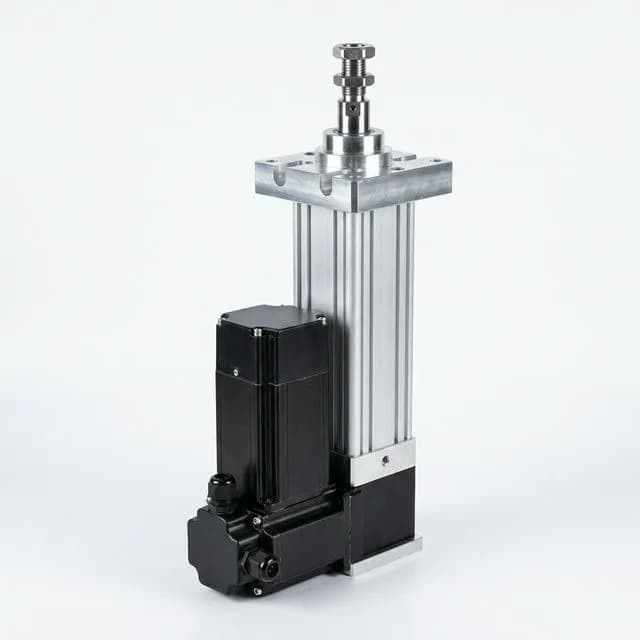
Actuator control unit product range
Compact drive modules, servo motors, encoders, and control-layer integration options for AMR actuator programs.
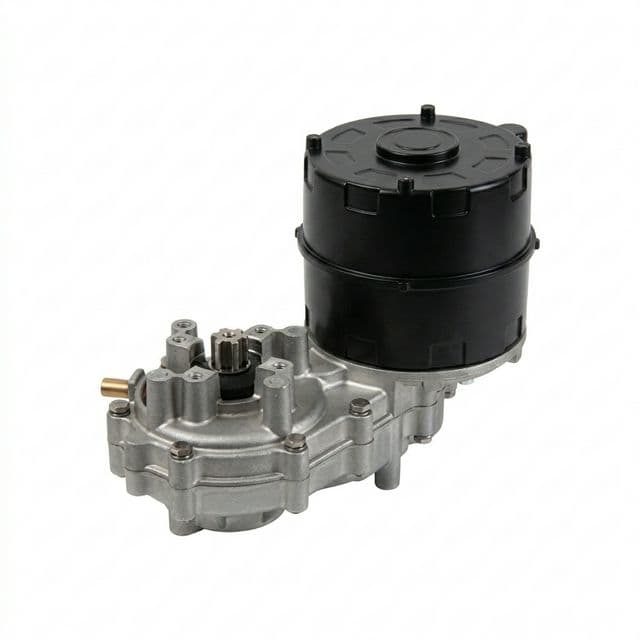
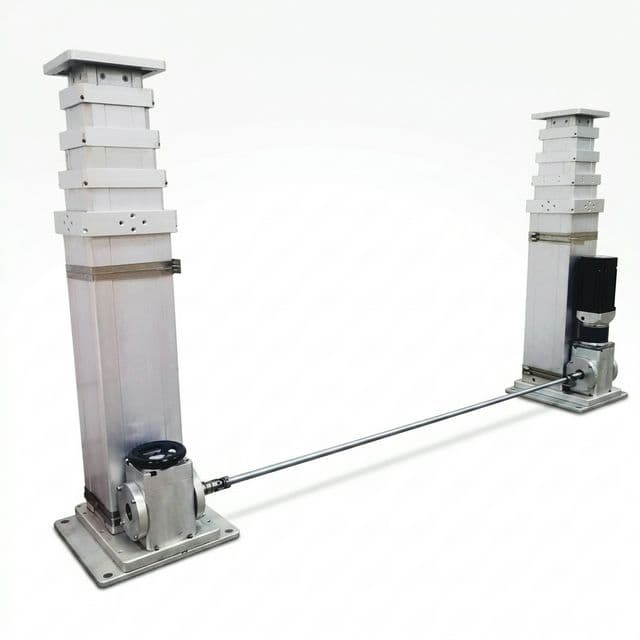
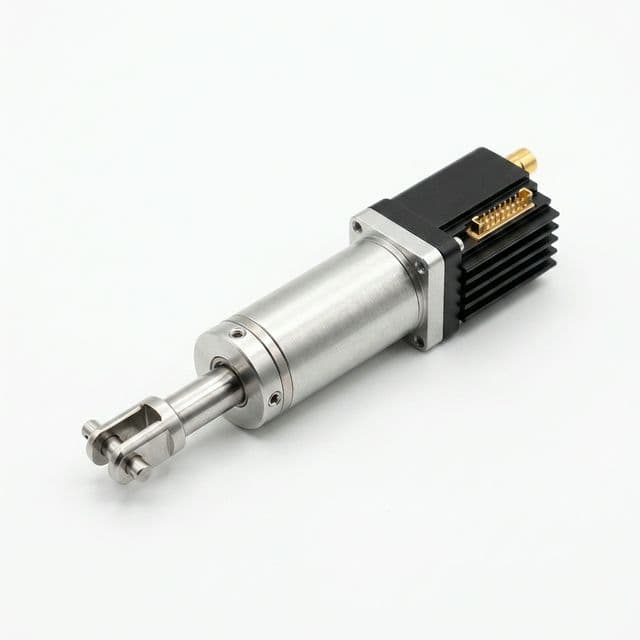
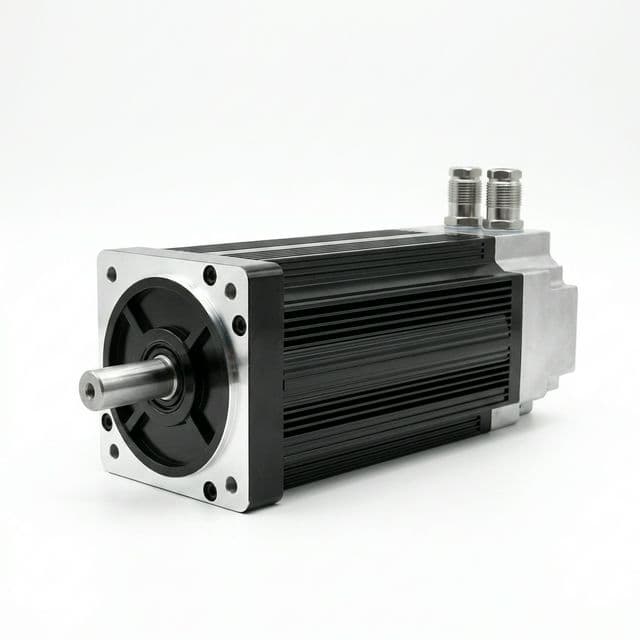
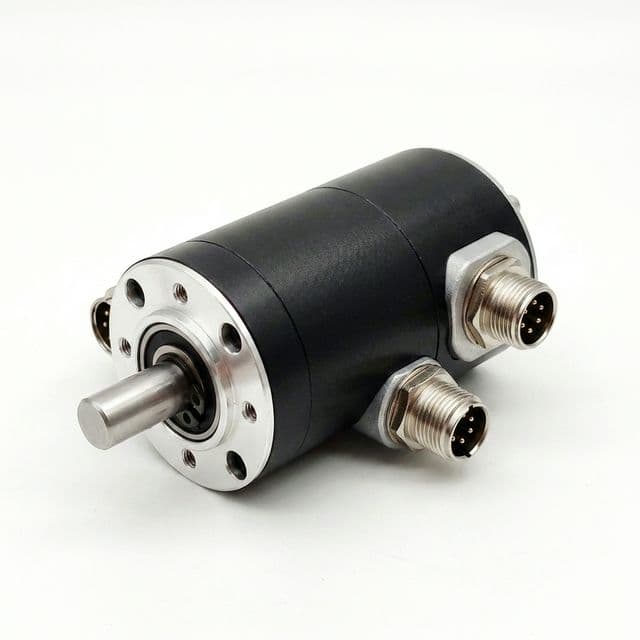
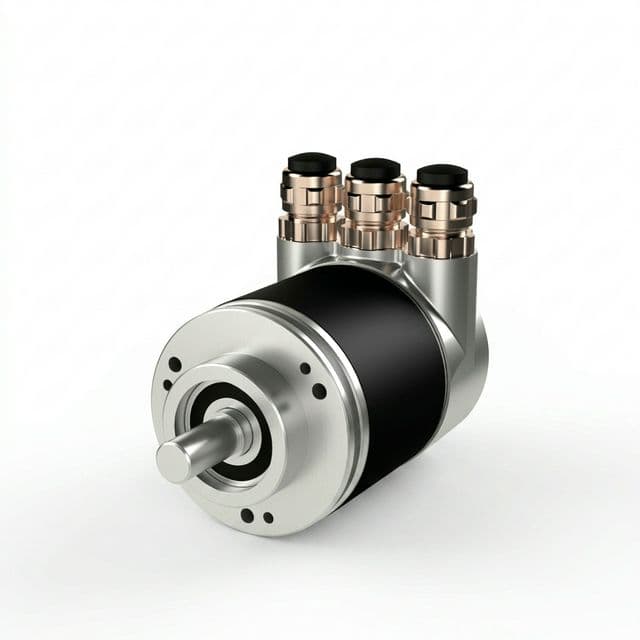
For projects combining integrated brushless servomotors with wireless fieldbus channels, use the dedicated fit workflow before freezing architecture.
Open wireless integrated-drive feasibility page