AMR Drive Unit Safety Sourcing: dSafe vs Safe Velocity
Compare AMR drive unit functional safety sourcing paths for ISO 3691-4:2023. Decide when to use dSafe-style safe motors or Safe Velocity software.
By Adrian Kowalski · B2B Applications & OEM Program Lead
Last reviewed: 2026/06/25
MDX editorial page reviewed for buyer-facing scope, date boundaries, source traceability, and internal-link coverage.
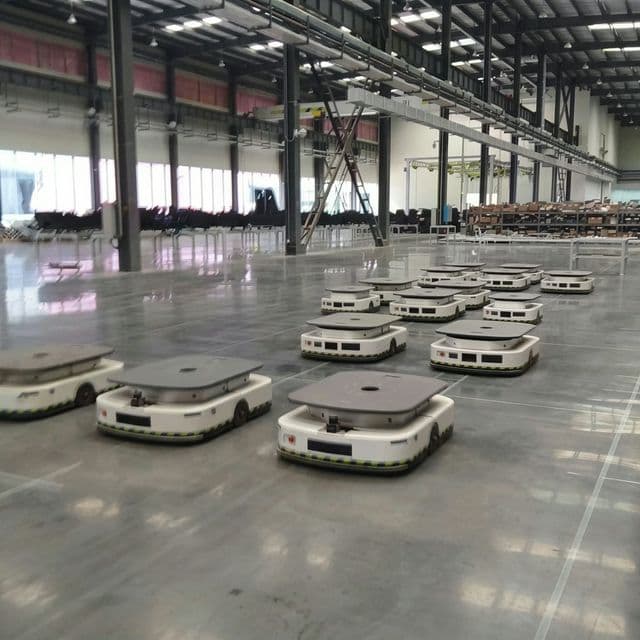
Decision-level conclusion as of 2026-06-25: AMR/AGV OEMs should decide whether functional safety belongs inside the drive unit or inside the vehicle-level safety software before releasing a 2026/2027 RFQ. Hardware-embedded safety raises component specificity but simplifies supplier evidence; software-defined safe-speed monitoring can reduce wheel hardware complexity but shifts validation work to the safety PLC, scanner data, and navigation team.
Research window: 2026-05-25 to 2026-06-25. Geographic scope: United States, European Union, and Asia-Pacific warehouse automation programs using AMR drive units, AGV traction modules, integrated motor-gearbox-drive-wheel assemblies, and mixed-traffic safety functions.
This page is a sourcing and integration decision guide, not a legal certification opinion. Final acceptance still depends on payload, maximum speed, braking distance, scanner layout, floor condition, safety PLC architecture, and the applicable regional compliance file.
Why This Matters for 2026 Sourcing
Functional safety is moving from a late-stage controls topic into the drive-unit RFQ. The buyer now has to choose where the certified speed evidence comes from: a traction module with embedded safe functions and safe fieldbus, or a central software library that calculates fail-safe velocity from existing vehicle sensors.
That choice changes bill of materials, supplier lock-in, validation workload, and acceptance evidence. It also affects navigation performance because scanner coverage, wheel slip, odometry quality, and safety-controller latency all become part of the same release gate.
What Changed (Last 30 Days)
| Signal | Primary Source | What Changed | Buyer Implication |
|---|---|---|---|
| Dunkermotoren dSafe Integration | Dunkermotoren | dSafe materials describe embedded STO, SS1, and SLS functions for BG 75 / BG 95 BLDC motors with PROFIsafe and FSoE communication. | Lets buyers request safety function evidence at the motor/drive-unit supplier level instead of only at vehicle integration. |
| Siemens SIMOVE Safe Velocity | Siemens | Siemens describes SIMOVE Safe Velocity as a certified failsafe speed software library for AGV/AMR vehicles using existing scanner inputs. | Can reduce dedicated safe encoder hardware, but moves proof responsibility into software, scanner coverage, and controller validation. |
| ISO 3691-4:2023 Current Edition | ISO | ISO lists ISO 3691-4:2023 as the current driverless industrial truck safety requirement and verification standard. | RFQs should reference the current edition and preserve a dated standards-version checkpoint before release. |
Deep Dive: Hardware-Embedded Safety (e.g., dSafe)
The hardware-centric approach integrates functional safety directly into the motor's onboard electronics. Components like Dunkermotoren's dSafe embed safety logic (STO, SS1, SLS, SBC, SLP) inside the housing of the brushless DC motor.
This means the drive unit natively communicates over safe fieldbuses (PROFIsafe via PROFINET or FSoE via EtherCAT) to the main safety PLC.
Key Advantages & Specs:
- Local safety-function ownership: Safety functions are processed at the drive-unit level, so the RFQ can ask for motor-family safety manuals, safety fieldbus support, and excluded-use assumptions directly from the traction supplier.
- Hardware Consolidation: Significantly reduces external wiring, third-party safety relays, and complex dual-encoder setups on the chassis.
- Cleaner supplier evidence boundary: The buyer can separate "certified drive function evidence" from "vehicle-level scanner and route validation," which is valuable for low-volume OEMs without a large safety software team.
Deep Dive: Software-Defined Safety (e.g., Safe Velocity)
Conversely, the software-defined path (championed by systems like Siemens SIMOVE Safe Velocity with SIMOTICS E ArgoDrive) abstracts the safety logic away from the physical motor encoder.
Instead of redundant safe encoders on the wheels, the safety controller cross-references standard odometry with point-cloud data from safety laser scanners.
Key Advantages & Specs:
- Potential BOM Cost Reduction: Can reduce the need for dedicated safety encoders per wheel when the certified software and supported scanner architecture are accepted in the vehicle safety case.
- Standardized PL d / SIL 2 Compliance: By leveraging components like the SIMATIC F-PLC, OEMs achieve SIL 2 / PL d compliance entirely through validated software algorithms rather than proprietary motor hardware.
- Supply Chain Decoupling: Separates safety certification from the motor supplier, allowing flexible procurement of standard drive components (e.g., standard gearmotors without STO/SLS variants).
Risks, Evidence Gaps, and Boundaries
To navigate this architectural fork, engineering and procurement teams must evaluate the following capability limits and risk factors.
| Dimension | Hardware-Embedded (dSafe) | Software-Defined (Safe Velocity) | Buyer Action Threshold |
|---|---|---|---|
| Response Time Limit | Safety loop is closer to the motor and can be easier to bound in the drive-unit evidence package. | Dependent on scanner input, network timing, PLC scan cycle, and validated software configuration. | If total vehicle mass > 1,500 kg and speeds > 2.0 m/s, calculate stopping distance with measured end-to-end latency before choosing software. |
| Vendor Lock-In | High on Motors: Tied to specific motor OEM for safety certification. Changing motor vendors requires re-evaluation of the safety loop. | High on Controller: Tied to PLC/software ecosystem (e.g., SIMATIC, TIA Portal). Standard drives can be swapped freely. | Choose your bottleneck: Lock-in on the traction wheel vs. lock-in on the central computing architecture. |
| Supply Chain & Lead Times | Vulnerable to chip shortages affecting smart motors. Lead times often exceed standard motors due to certified MCUs. | High availability of standard non-safe motors. Software licenses scale instantly without physical supply constraints. | If scaling > 1,000 units/year rapidly, software-defined reduces physical BOM bottlenecks. |
| Environmental Dependency | None. Encoders measure actual wheel movement regardless of surroundings. | High. Relies on safety laser scanners. Featureless environments (long empty aisles) can degrade velocity vector calculations. | Ensure facility layout provides enough static reference points if using software-defined odometry. |
| Evidence Gap | Actual field failure rates of integrated safe-encoders under heavy vibration are rarely published by OEMs. | Impact of complex dynamic environments on CPU load and false-positive stops is not yet standardized across the industry. | Mandate Proof-of-Concept (PoC) testing in worst-case scenarios before committing. |
Who Should Act Now (Buyer Checklist)
The divergence in safety architectures forces immediate decisions for 2026/2027 product roadmaps.
| Stakeholder | Action Item | Verification Document / Milestone |
|---|---|---|
| System Architects | Evaluate if the current navigation IPC / Safety PLC can handle software-defined safety (e.g., SIMATIC F-PLC) without exceeding 60% CPU load under peak conditions. | Load test report / System Architecture Diagram. |
| Procurement Managers | Compare the Total Cost of Ownership (TCO) at scale. Standard drives + software licenses usually cross over to become cheaper than safe-motors at >250 units/year. | 3-Year TCO / BOM scaling matrix. |
| Safety Engineers | Recalculate stopping distances. Ensure that the end-to-end communication latency between central PLC and standard drives complies with ISO 3691-4. | Dynamic stopping distance test protocol. |
| Compliance Officers | Audit regional validity. Ensure hardware or software architectures carry valid PL d / SIL 2 certificates from TÜV Rheinland or equivalent for target deployment regions (EU vs US). | Current TÜV or UL certification dossier. |
Internal Resources for Next Steps
- ISO 3691-4 AMR drive-unit sourcing guide: Use this to define STO, SLS, brake, encoder, and supplier evidence requirements before quote release.
- STO / SLS validation checkpoints before pilot release: Use this to turn supplier claims into release-gate tests.
- AGV drive unit engineering guide: Use this to cross-check payload, wheel, brake, protocol, and safety boundaries.
- AGV drive system engineering guide: Use this when the architecture decision affects battery, controller, drivetrain, and fleet-level behavior.
- Contact the engineering team: Request a drive-unit safety evidence review before sample purchase order release.
FAQ
Which approach is better for a high-mix, low-volume OEM?
Hardware-embedded safety (like dSafe) is generally better for low-volume OEMs because it outsources the complex safety engineering to the motor supplier. You buy a certified component, saving months of software validation.
How do these systems handle wheel slippage?
In a hardware setup, dual encoders detect the slip but might trigger a false safety fault if the wheels spin freely. Software-defined systems cross-reference scanner data with wheel odometry, so they can logically deduce that the robot is slipping but not actually moving dangerously, preventing unnecessary stops.
Does ISO 3691-4 require physical safe encoders?
No. ISO 3691-4 requires a verified function (Speed and Distance Monitoring) meeting specific Performance Levels (PL). It is agnostic to whether this is achieved via hardware encoders or validated software algorithms.
Are standard drives compatible with Safe Velocity?
Yes. The primary advantage of software-defined safety is that it allows the use of high-quality standard traction units (like the SIMOTICS E ArgoDrive) without requiring them to have internal safety ratings, provided the overarching software architecture is certified.
Sources
| Source Title | Institution | Date | URL |
|---|---|---|---|
| Functional Safety Solutions for BLDC Motors | Dunkermotoren | Accessed 2026-06-25 | https://www.dunkermotoren.com/en/knowledge/functional-safety-solutions-for-bldc-motors |
| Holding and Safety Brake Solutions for Industrial Automation | Dunkermotoren | Accessed 2026-06-25 | https://www.dunkermotoren.com/en/knowledge/holding-and-safety-brake-solutions-for-industrial-automation |
| SIMOVE Safe Velocity | Siemens | Accessed 2026-06-25 | https://www.siemens.com/en-us/products/simove/safe-velocity |
| Safe Velocity (SIMOVE Safe Velocity) | Siemens SiePortal | Accessed 2026-06-25 | https://sieportal.siemens.com/en-ww/products-services/10599547 |
| ISO 3691-4:2023 Industrial Trucks — Safety Requirements and Verification — Part 4 | ISO | 2023 | https://www.iso.org/standard/83545.html |